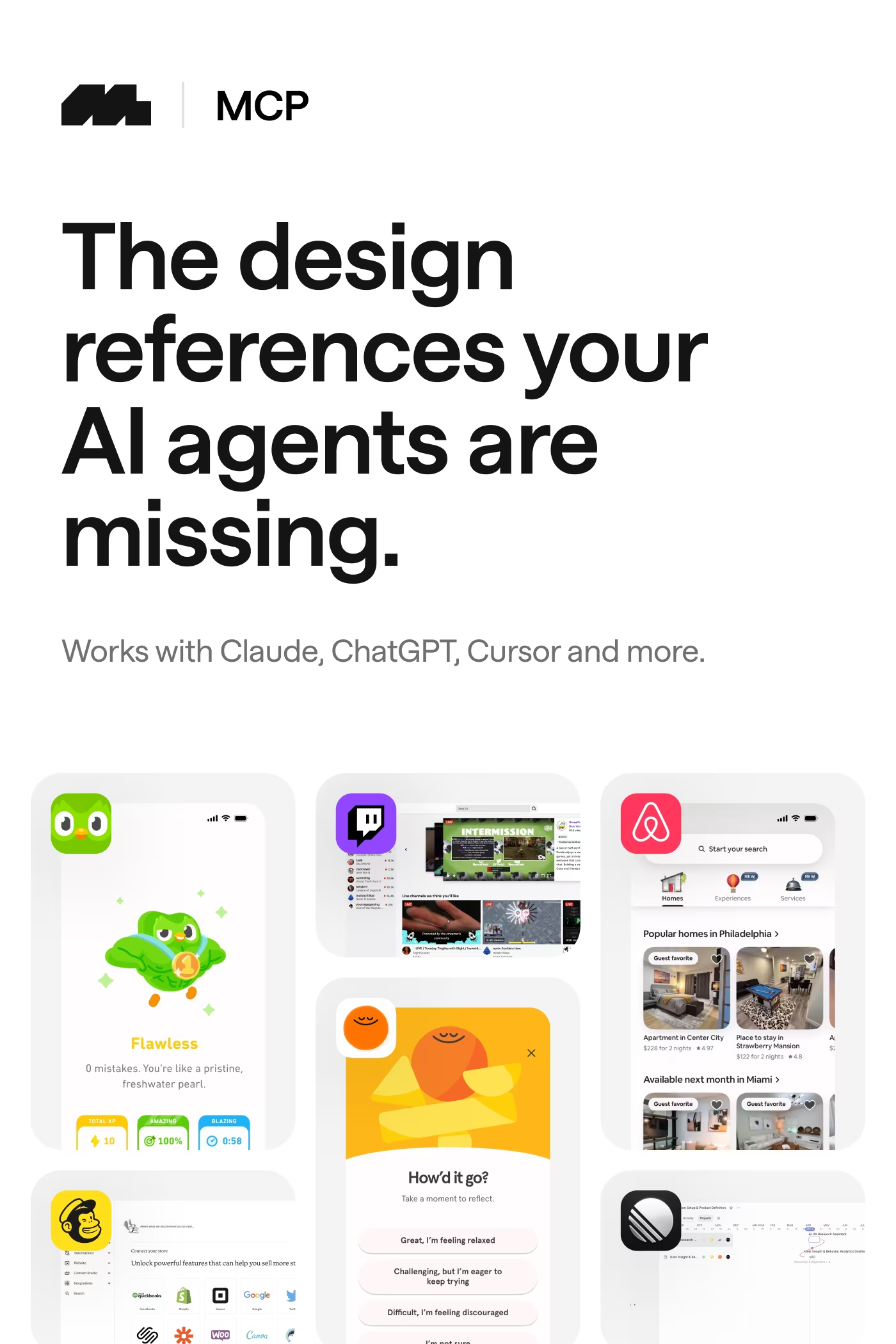
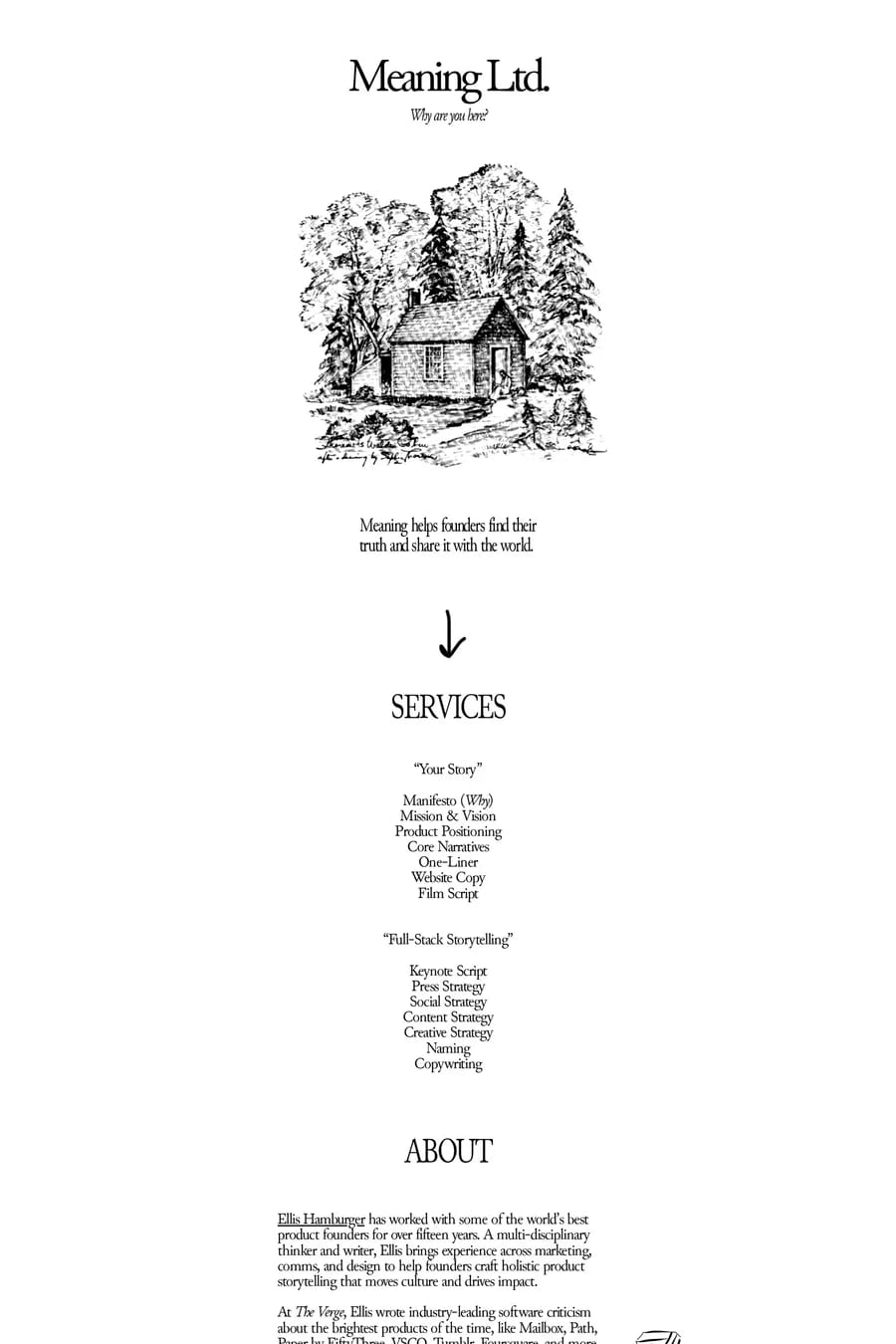
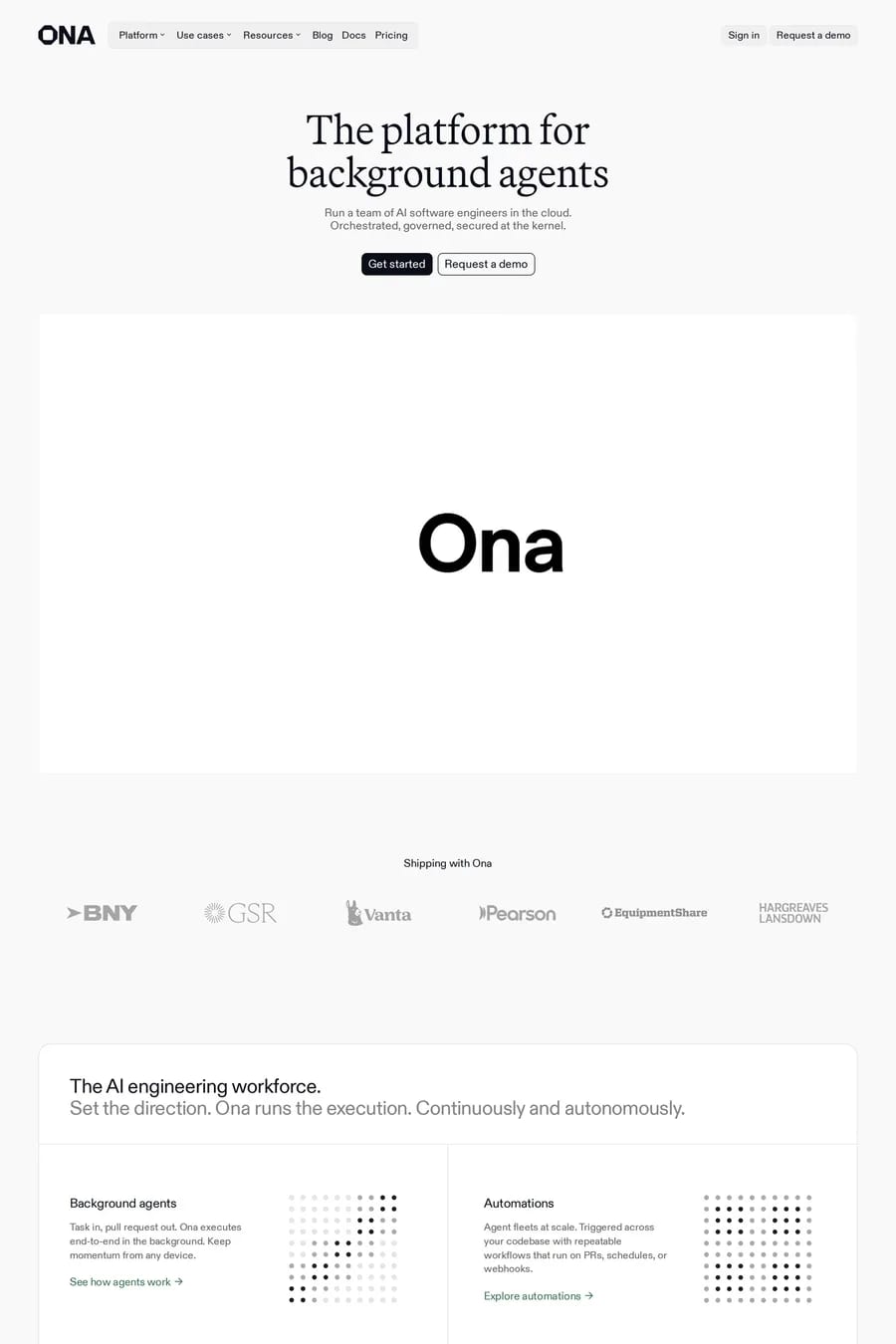
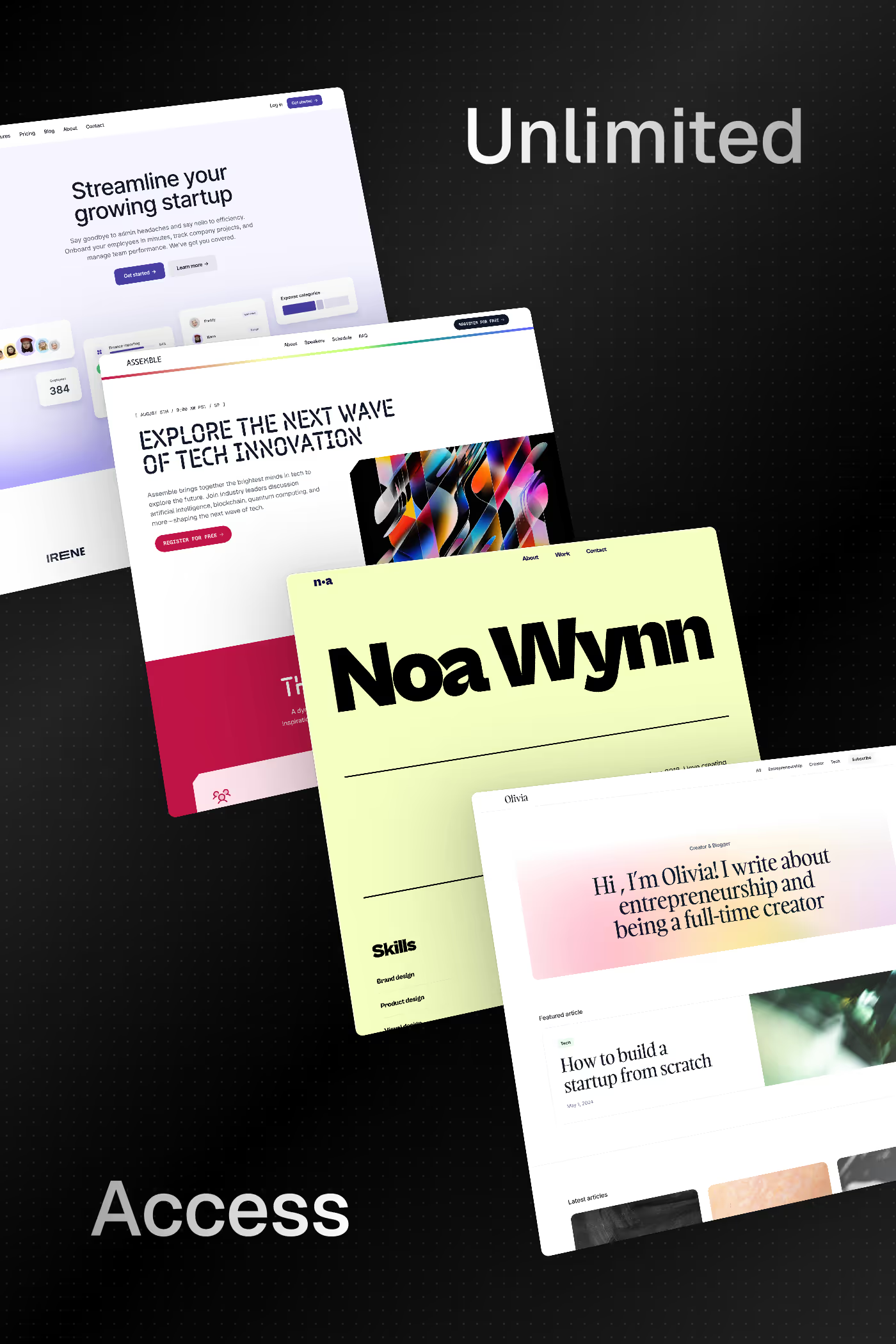
Next.js is the framework most production teams reach for when "a website builder" stops being enough. It’s a React framework with built-in server-side rendering, static generation, edge deployment, image optimisation, and routing — the things that used to require either custom infrastructure or a full backend team are now available out of the box. That’s why Next.js has become the default choice for technically-led teams building marketing sites, product landing pages, documentation sites, blogs, and any project where the marketing site and the product are sharing component code. The best Next.js sites in this collection don’t look "developer-built." They have the kind of typography, animation, and visual finish you’d expect from sites built on design-led platforms, with the performance characteristics and flexibility of a real codebase underneath. The weakest ones look exactly like they were built by engineers who didn’t hire a designer. The differentiator isn’t the framework; it’s whether design discipline got applied to the front-end at the same level as the engineering discipline that chose Next.js in the first place. Look at how the strongest Next.js sites handle the marketing-product boundary. They share components, design tokens, and content models between the marketing site and the product itself, so the brand experience is consistent across the funnel. Look at how they handle performance. Next.js gives you the tools (image optimisation, code splitting, edge rendering, prefetching) but doesn’t apply them automatically — the strongest sites in this collection are deliberately optimised, often achieving sub-second load times even on complex pages. Browse Next.js landing pages, Next.js AI sites, or Next.js software products for the dominant patterns. Compare against Framer and Webflow for the no-code alternatives.