
Updated
Curated inspiration sent every Tuesday
Unsubscribe at any time

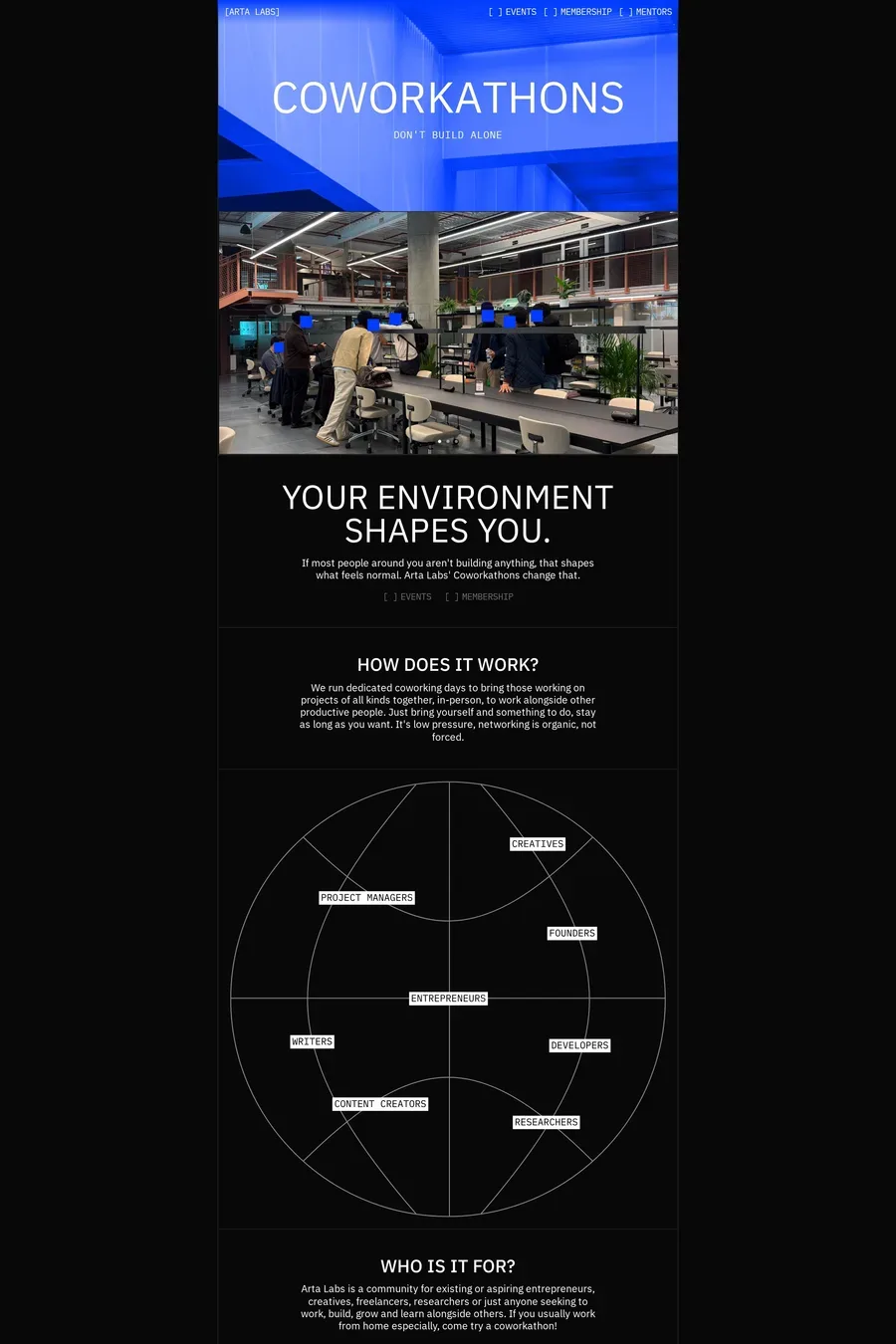
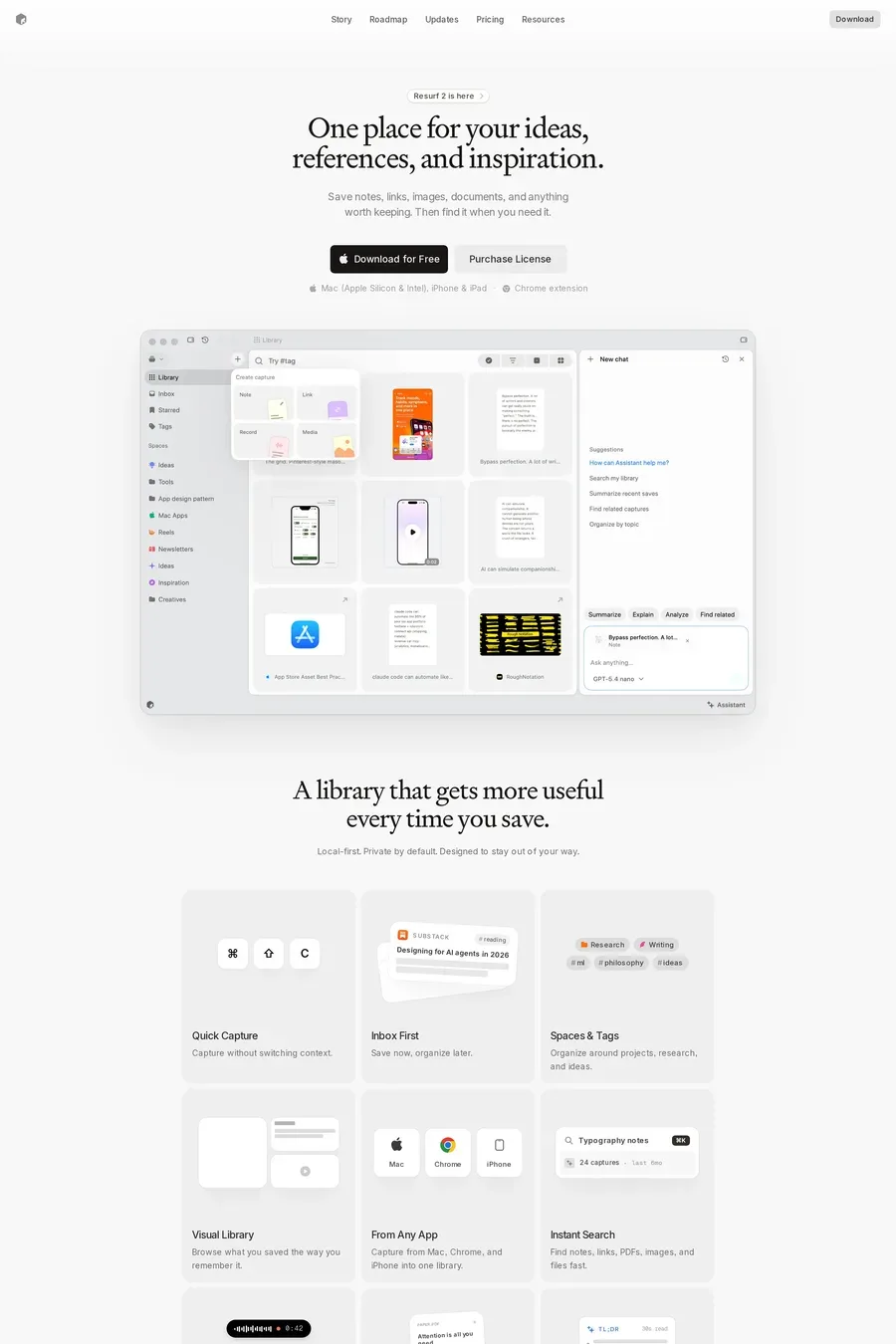
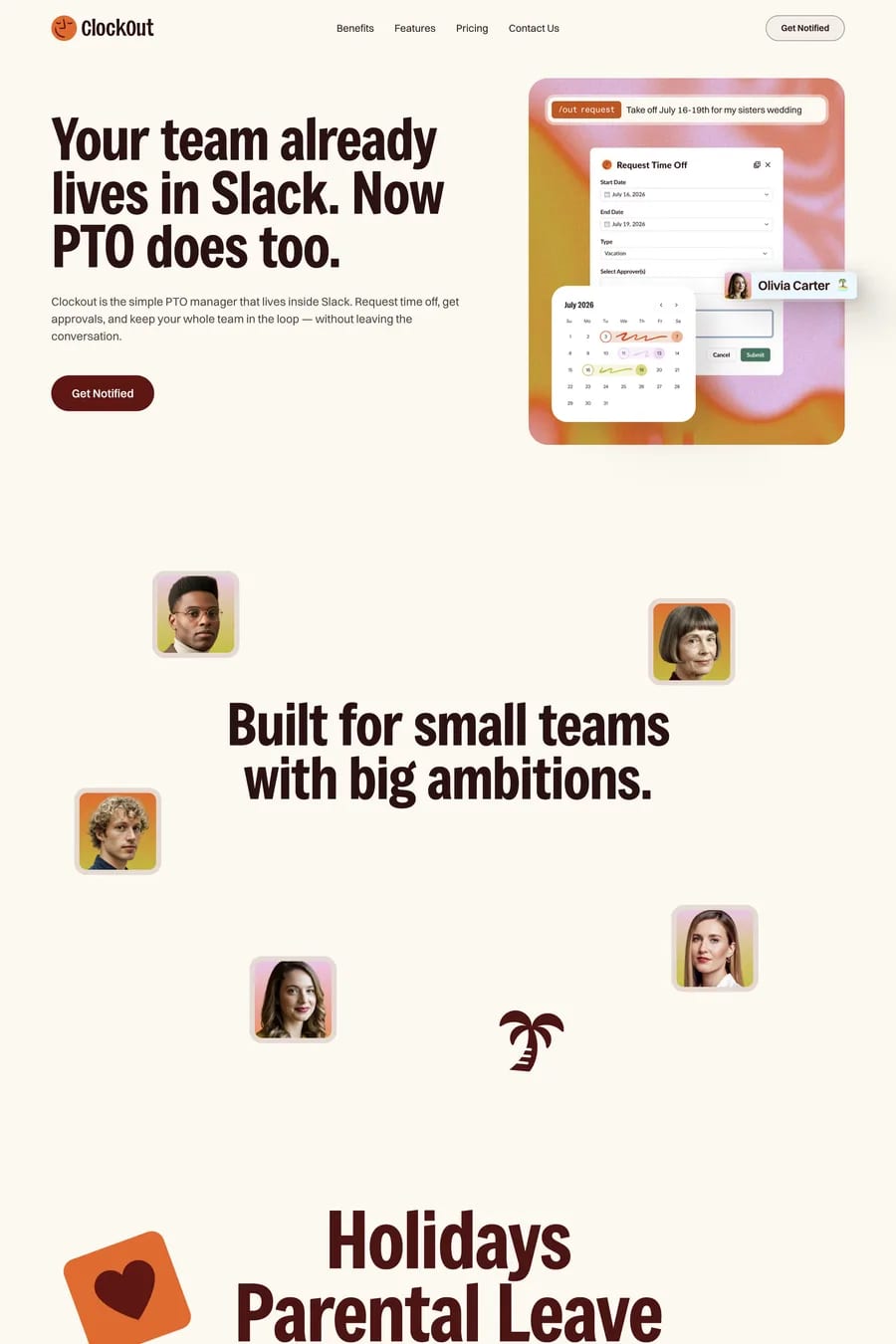
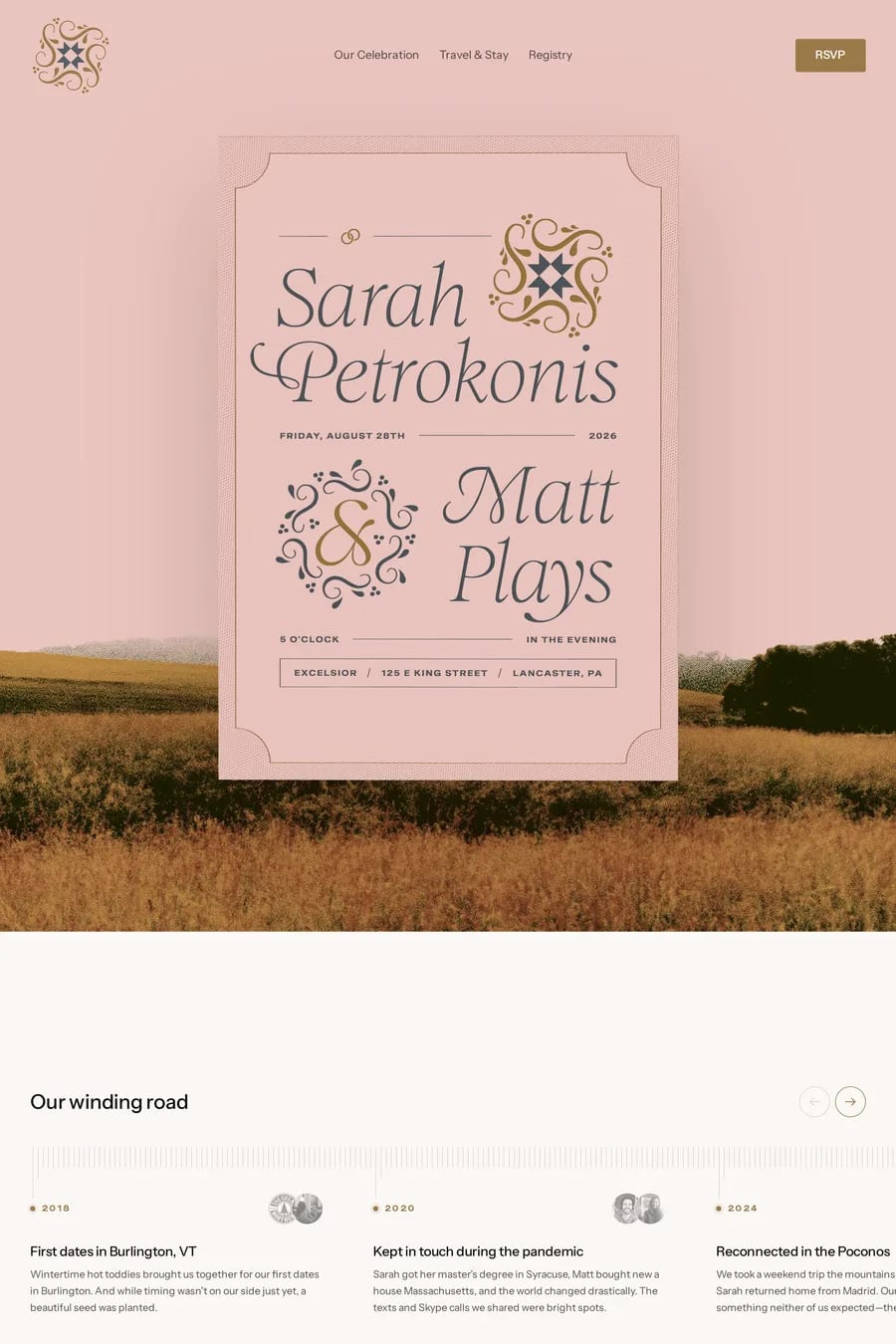
When the content is focused enough to be told as a single linear story, and when SEO isn’t the primary traffic source. One-pagers work brilliantly for product launches (one product, one promise), event sites (one event, one date, one CTA), personal portfolios with 3–6 strong projects, and any context where the visitor’s journey can be choreographed. They fail when the site needs internal navigation, multiple distinct audience paths, or organic search performance across multiple topics. If you find yourself tempted to add a second page "just for the blog" or "just for the about page", you’re past the point where a one-pager fits.
With anchor links to in-page sections, smooth-scroll behaviour, and a fixed nav bar that highlights the active section as the visitor scrolls. The best one-pagers in this collection use minimal navigation — three to five anchor links at most — because the format works against the navigation paradigm in the first place. If the nav has more than five items, the content probably wants to be split across multiple pages. And the nav should *help* the visitor, not perform: hiding it on scroll-down and revealing on scroll-up is now standard for a reason.
Poorly, by structural design. A one-pager has exactly one URL to rank with, which means it can target one primary keyword cluster and not much else. If organic search is your main traffic source, a one-pager is the wrong format. If organic search is a nice-to-have on top of paid acquisition or direct traffic, the SEO limitations matter less. The best one-pagers in this collection treat SEO as a secondary concern; they rank for their brand name and that’s it. Trying to make a one-pager rank for ten different keyword clusters is a losing battle.
Cramming too much into the hero (the format demands restraint, not panic); running sections together with no breathing room; using parallax or scroll-jacking that fights the visitor’s expected scroll behaviour; forgetting the bottom of the page exists and burying the CTA in the middle; and failing to give the visitor a sense of where they are in the page. The single biggest mistake is treating a one-pager as "a normal website but compressed" rather than as its own form with its own conventions.
Framer and Webflow dominate this category — both are excellent for the kind of motion-rich, scroll-narrative sites the format demands. Next.js is used for one-pagers that integrate with a product (waitlist sign-ups, demo interactions, interactive components). The platform matters less than the discipline: a great one-pager built on any of these platforms beats a weak one-pager built on a more "powerful" stack. Browse Framer one-page sites and Webflow one-page sites for the dominant platform patterns.