Curated inspiration sent every Tuesday
Unsubscribe at any time
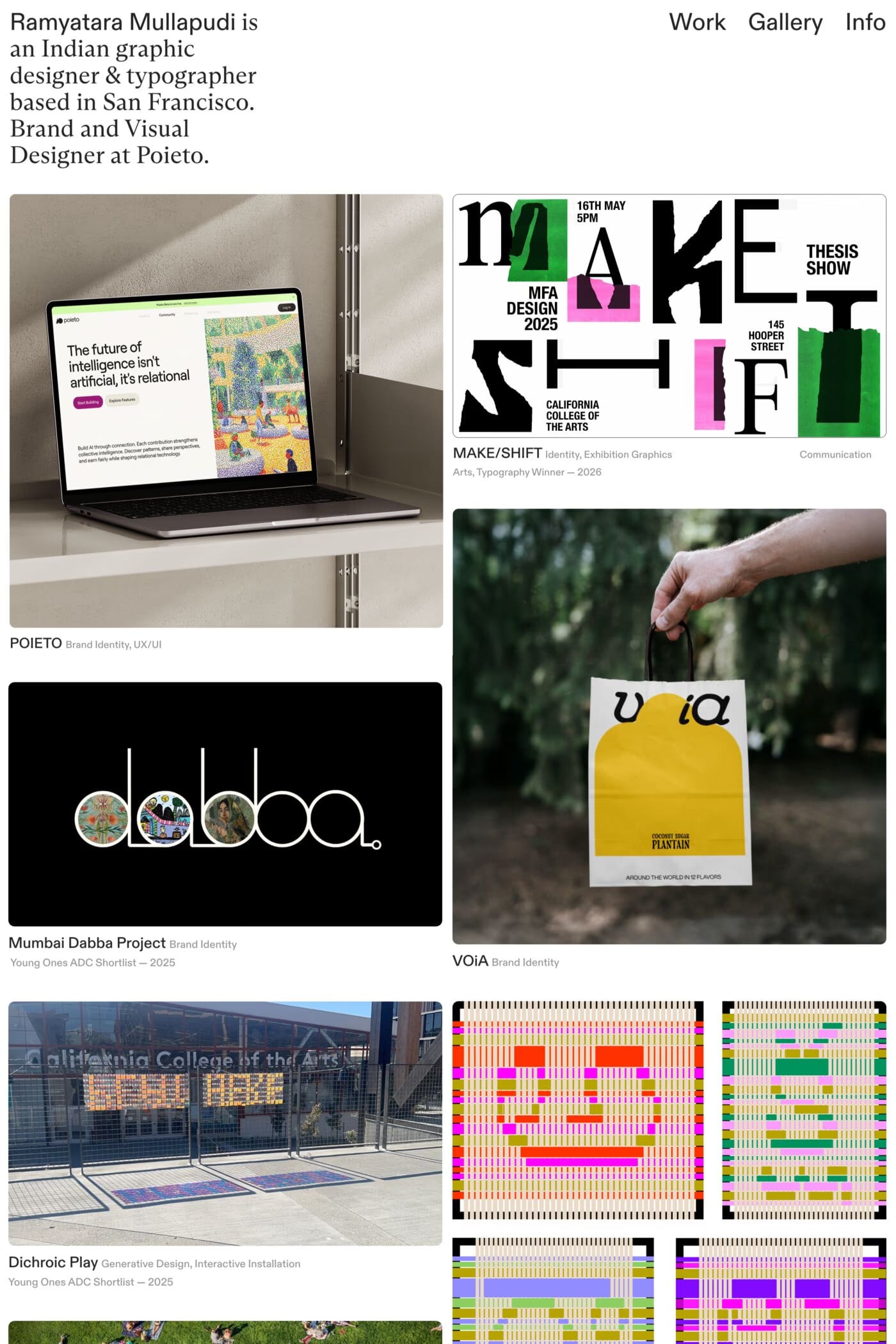

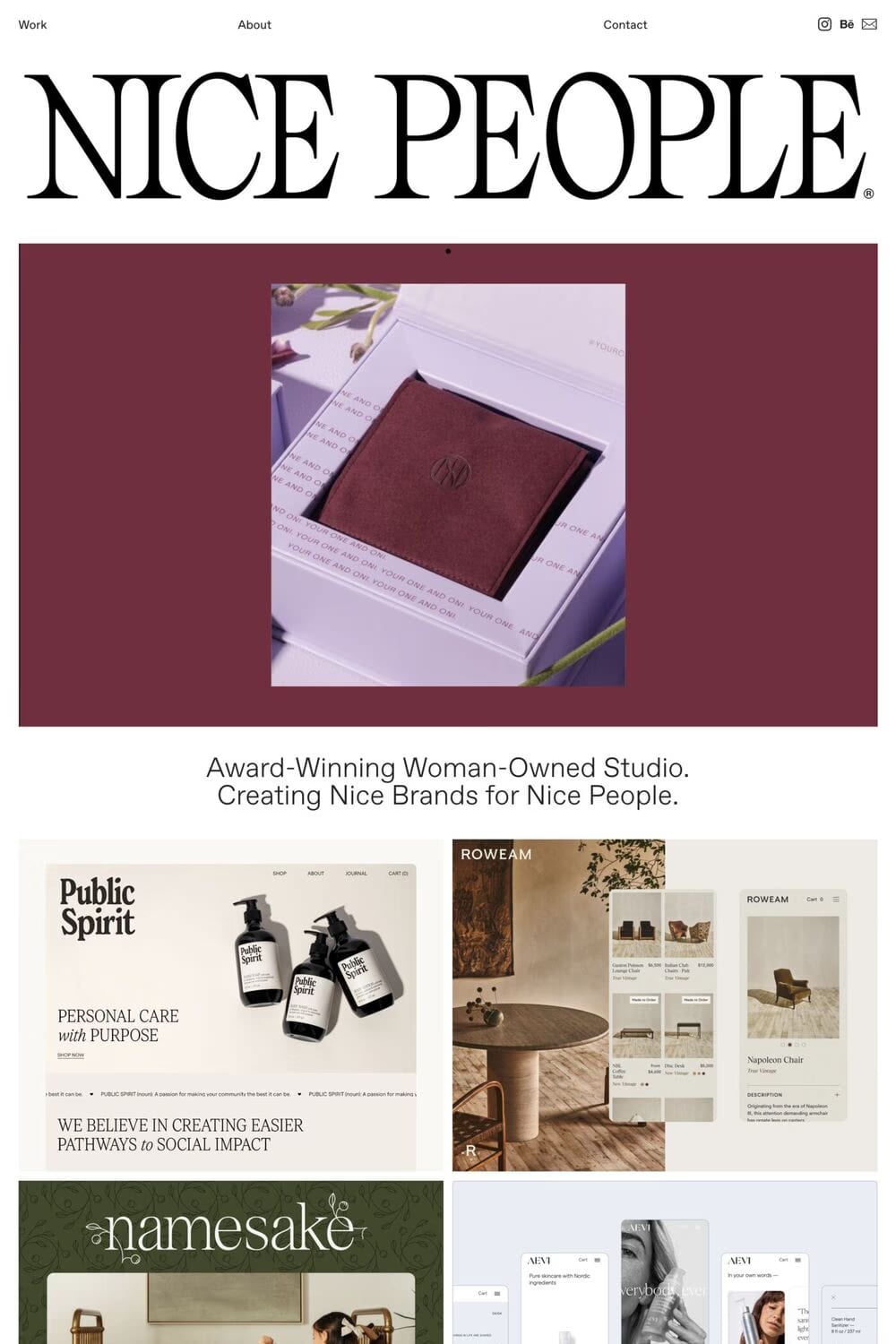
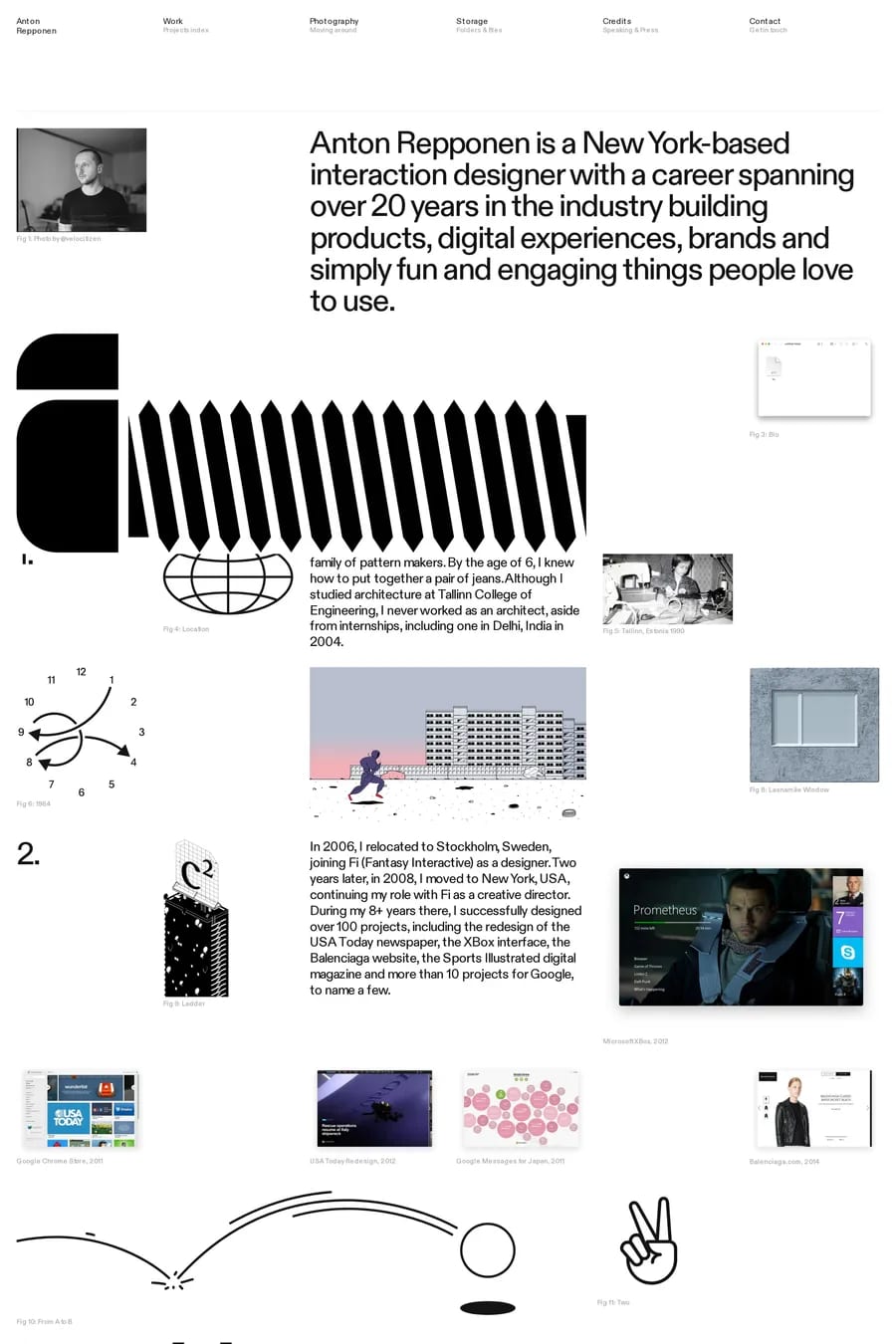
Photography portfolios, art director sites, illustrator portfolios, gallery and exhibition sites, fashion lookbooks, and small creative studios where visual presentation is the entire offering. Cargo excels when the content is image-led and the layout needs to feel curated rather than templated. It’s less suited for content-heavy sites, e-commerce, marketing pages, or anything where structured CMS-driven content is the priority. The platform’s strength is also its limit: the freeform canvas makes weird beautiful things possible but normal pages harder to build.
Freeform layout. Cargo treats each page as a canvas where elements can be positioned anywhere, overlapped, rotated, and arranged with the kind of typographic and compositional freedom usually only available in print design tools. Webflow and Framer are both grid-and-flex-based, which makes them excellent for "normal" web layouts but harder to push into editorial or experimental territory. If your reference material is a magazine spread or a poster, Cargo is the right tool. If your reference is another website, Webflow or Framer probably are.
Cargo has unusually deep typographic controls for a no-code platform: variable font support, precise letter-spacing and line-height controls, custom font upload, and careful handling of how type interacts with overlapping elements. Designers from print backgrounds who find most web builders typographically constrained tend to find Cargo refreshingly precise. The platform was clearly built by people who care about type, and it shows in the kind of details — kerning controls, optical sizing, balanced line wrapping — that other platforms treat as edge cases.
CMS structure is more limited than Webflow or Framer; animation tools are simpler than Framer; e-commerce is supported but not the platform’s strength; and the freeform canvas can be confusing for designers used to section-based builders. Cargo also serves a smaller community than the larger platforms, which means fewer third-party templates, plugins, and learning resources. The platform is best understood as a specialised tool for a specific kind of site, not a general-purpose website builder.
Reasonably, but not exceptionally. Cargo generates clean HTML and handles basic SEO needs (meta tags, sitemaps, alt text), but it’s not the platform to choose if organic search is your primary traffic source. Most Cargo sites in this collection rank for brand-name searches and direct traffic from referrals, not for competitive keyword categories. Performance is generally good for image-led portfolio sites, with the usual caveats about large image weights — Cargo lets you upload high-resolution images but doesn’t aggressively optimise them by default.
Photographers, illustrators, fashion designers, art directors, small creative studios, gallery and exhibition projects, design schools and student portfolios, and a strong contingent of independent designers who reject the "every website looks the same" criticism levelled at Squarespace and Webflow. Cargo has a particular following among East Asian and European creative communities — many of the strongest examples in this collection come from Tokyo, Seoul, Berlin, and London studios. The platform feels chosen rather than defaulted into.