
Curated inspiration sent every Tuesday
Unsubscribe at any time
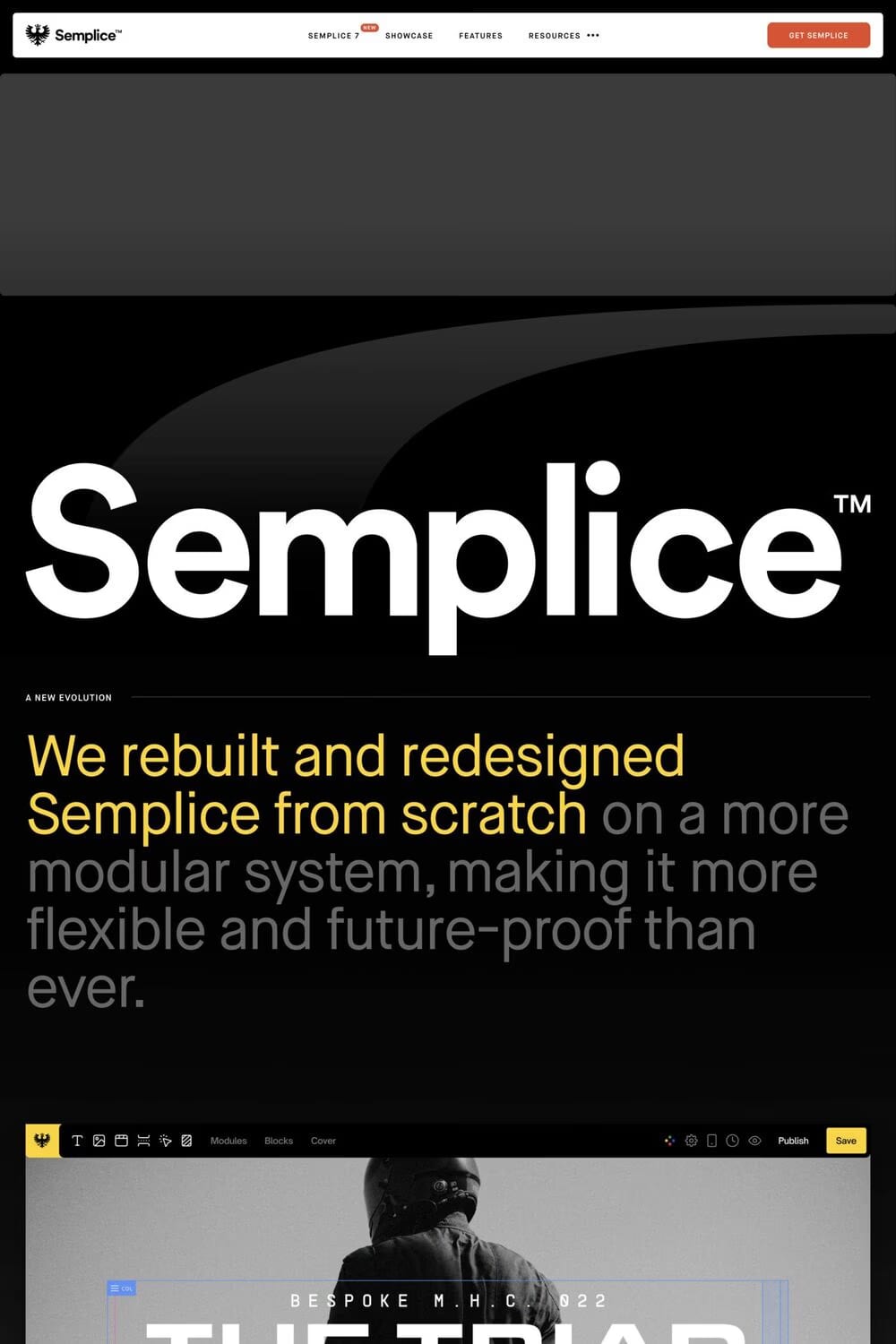
Because Semplice is built specifically for case study presentation by people who have spent years thinking about how designers present their work. Generic WordPress themes treat portfolio pages as a feature among many; Semplice treats them as the entire point. The editing experience is tuned for case study rhythm, the layout components are designed for design work specifically, and the support community is composed of practising designers rather than general WordPress users. For anyone presenting design work, the difference is significant.
It runs on WordPress, which means designers get the mature blogging tools, plugin ecosystem, and content management workflow WordPress is known for, alongside the portfolio-specific tools Semplice adds. Framer and Webflow require you to build everything from scratch on a less mature CMS. For designers who want to publish writing alongside their portfolio work — case study deep-dives, opinion pieces, project journals — Semplice on WordPress is a more complete solution than Framer or Webflow currently offer.
Mature SEO tooling via plugins like Yoast, a familiar content management interface that doesn’t require learning a new editor, the option to use any WordPress plugin for additional functionality, no vendor lock-in, full export of content if you ever want to move, and the ability to host wherever you want. WordPress’s age is sometimes a criticism, but in this context the maturity is a feature — most things you might want to do are already solved problems with plugin solutions.
It inherits WordPress’s complexity — hosting, security updates, plugin compatibility, and theme conflicts are all real concerns. Performance is heavier than purpose-built static portfolio platforms. Animation tools are simpler than Framer. The visual editor, while specialised for case studies, has a steeper learning curve than newer platforms designed for less technical users. And the platform’s growth has slowed as Framer has captured significant market share among designers who want a more modern building experience.
Established designers who set up their portfolio on WordPress years ago and value the maturity of the platform, designers who write extensively alongside their portfolio work, art directors who appreciate the case study tooling, and anyone who wants the WordPress ecosystem but better portfolio tools than generic themes provide. The platform has lost some momentum to Framer and Webflow among newer designers, but it remains a strong choice for the specific use case it was built for.
For designers whose portfolios are case-study-led, who write blog content alongside, and who value WordPress’s plugin ecosystem and content management maturity — yes, Semplice is still a strong choice. For designers building from scratch who don’t have an existing WordPress investment and want the fastest path to a polished portfolio, Framer is usually the easier recommendation in 2026. Both produce excellent portfolios; the choice depends on whether the WordPress foundation is an asset or an obstacle.