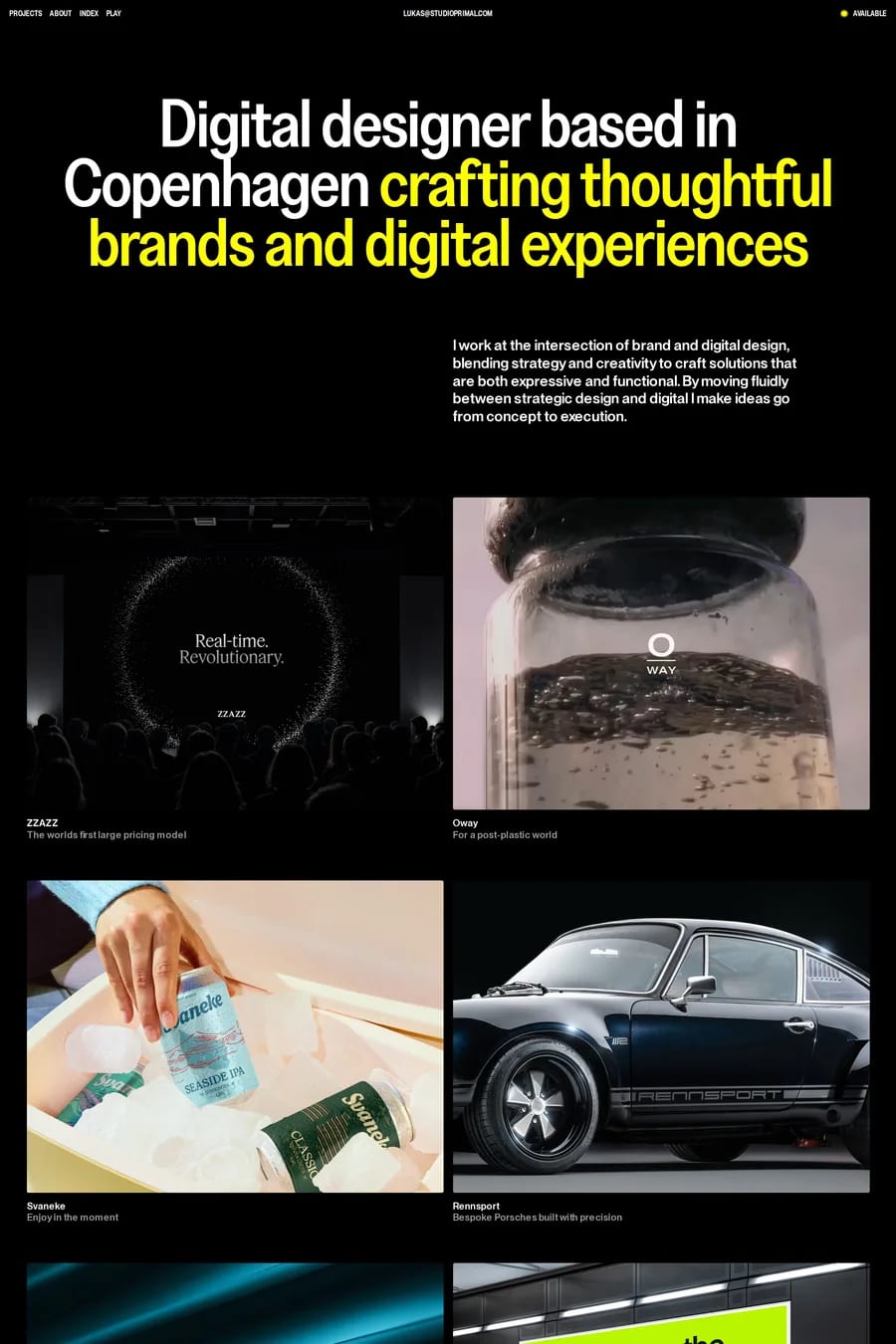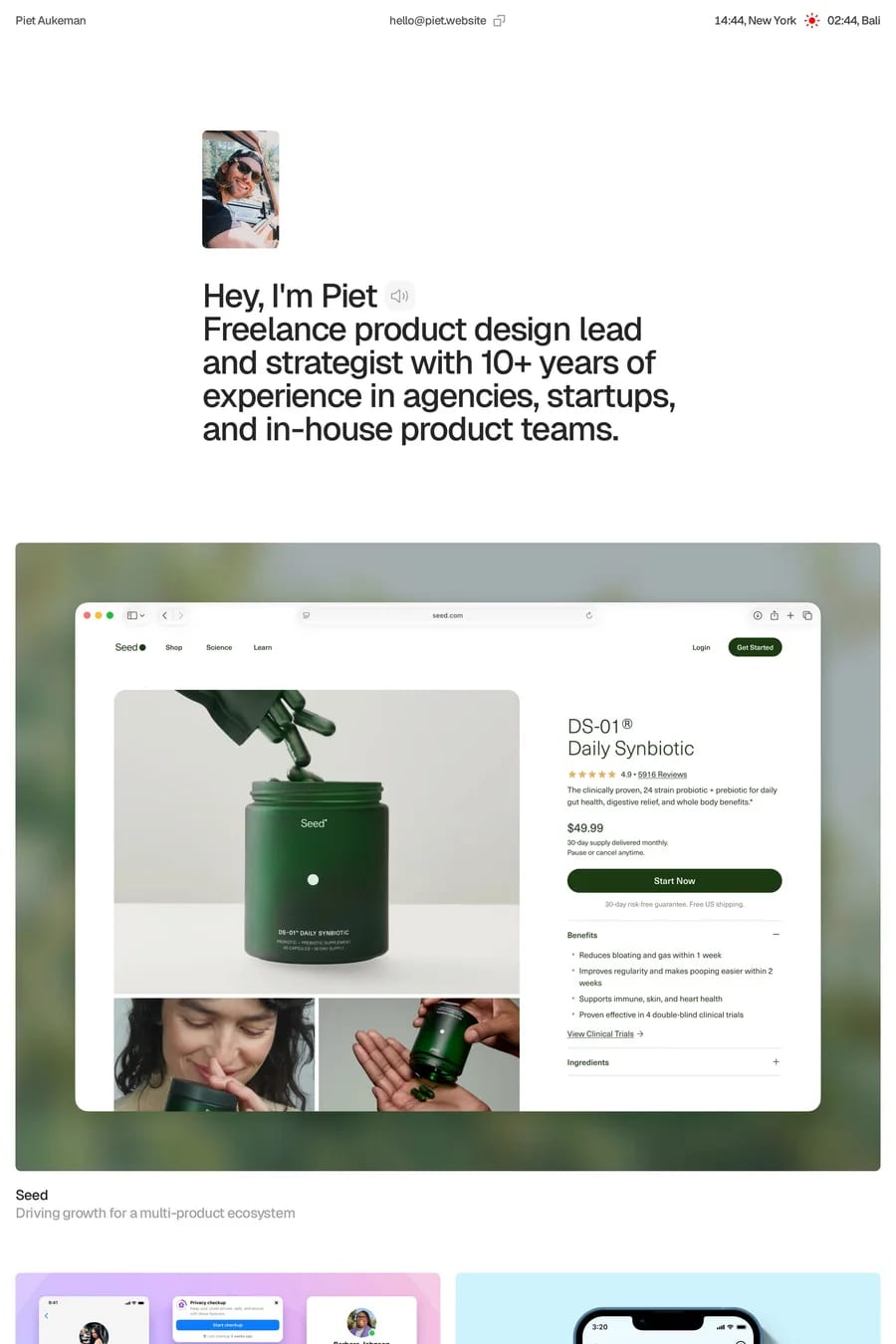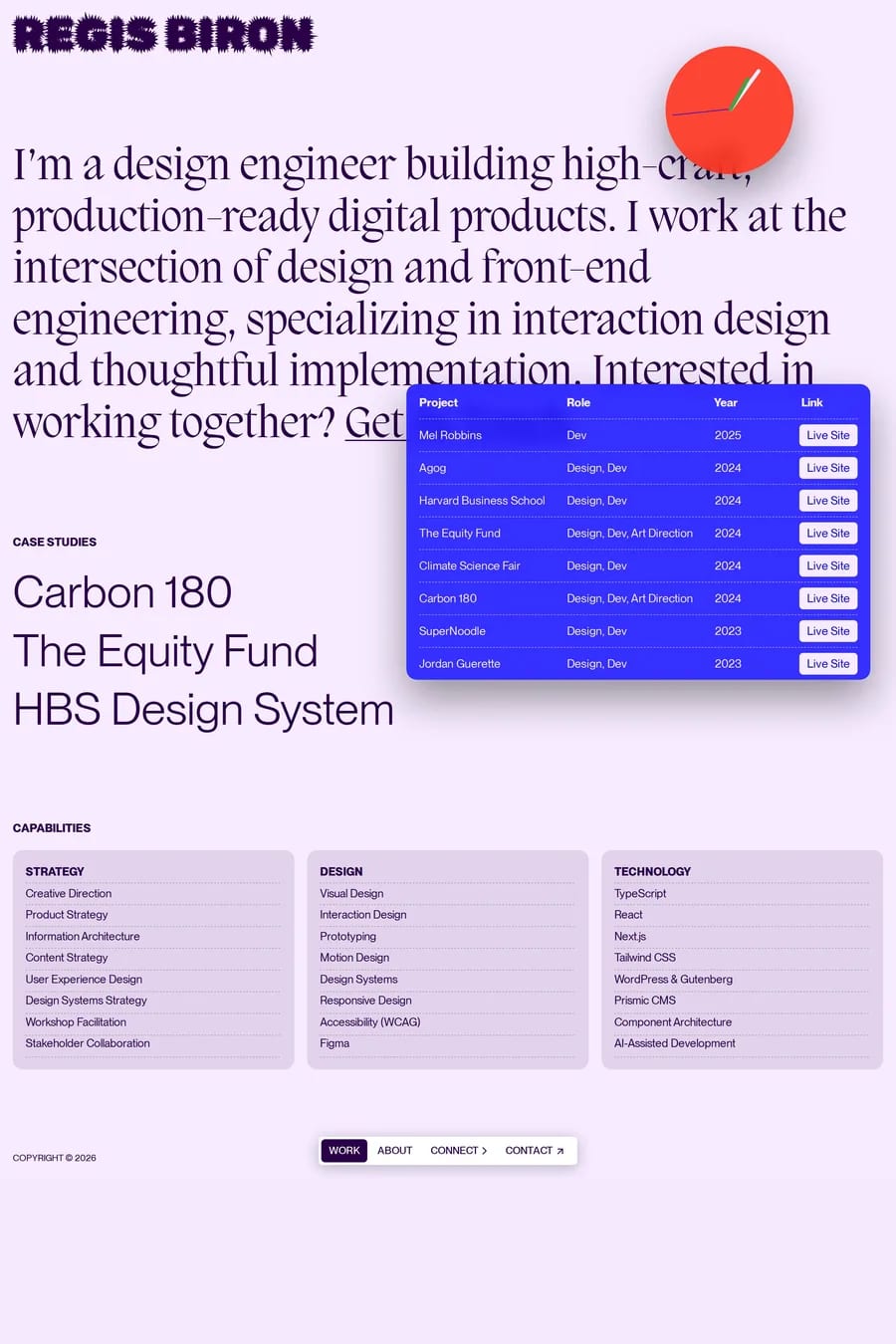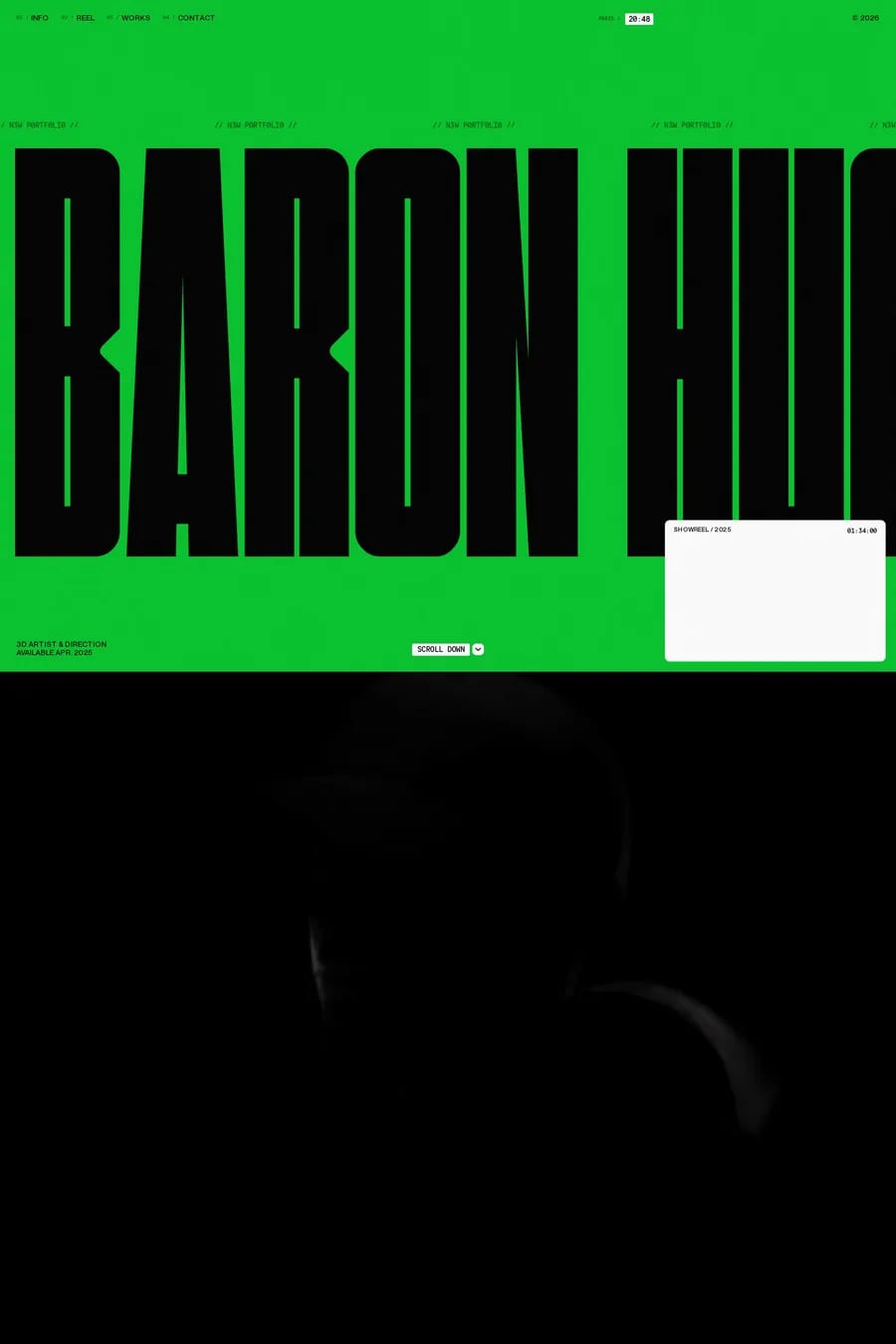
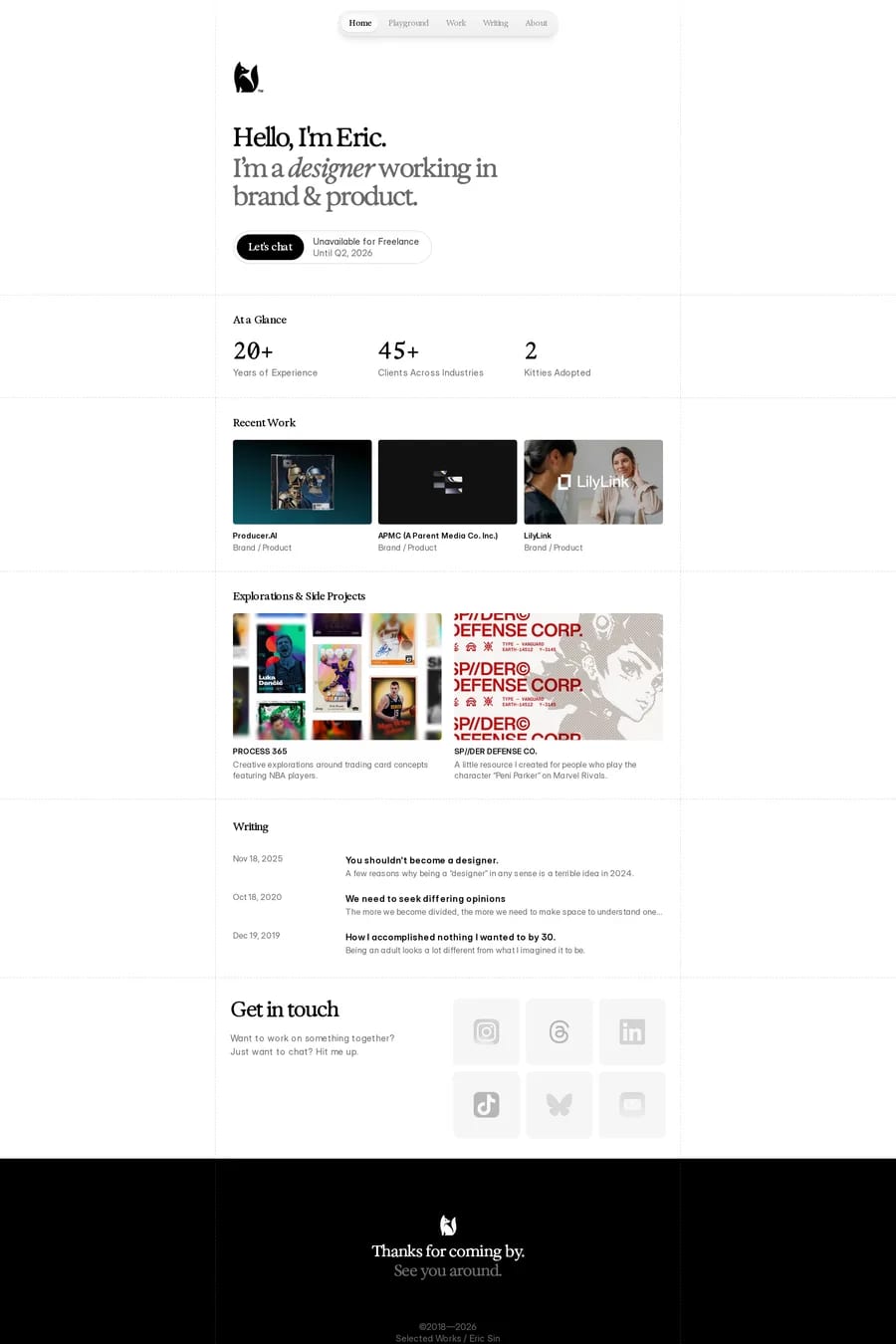
Portfolios are arguments for taste. The best ones in this collection show six to ten pieces of work and tell you exactly what to think about each one. The weakest ones show fifty pieces in a uniform grid and let you draw your own conclusions, which is the same as saying the designer doesn’t have any. There’s a strong correlation in this collection between portfolio quality and *editorial confidence* — the willingness to cut, to order, to caption, to commit to a position. Look at how the strongest portfolios handle the homepage: it’s usually three or four projects, not twenty. The visitor doesn’t need to see everything; they need to see enough to decide whether the designer’s taste matches what they’re hiring for. Showing fewer projects is the single highest-leverage change most portfolios could make. Watch how the strongest examples write project descriptions, too. They’re short but they have an opinion. "Brand identity for a Berlin coffee importer, 2024" is metadata. "We rebuilt the Berlin coffee importer’s identity around the idea that good coffee doesn’t need to apologise for its price" is a designer with a point of view. The point of view is what gets remembered. Browse designer profiles for real examples, or explore minimal portfolios, Framer portfolios, and animated portfolios by style and platform. The most underrated decision in portfolio design is *what not to show*. The strongest designers in this collection have hidden more work than they’ve shown, and the portfolio is stronger for it.