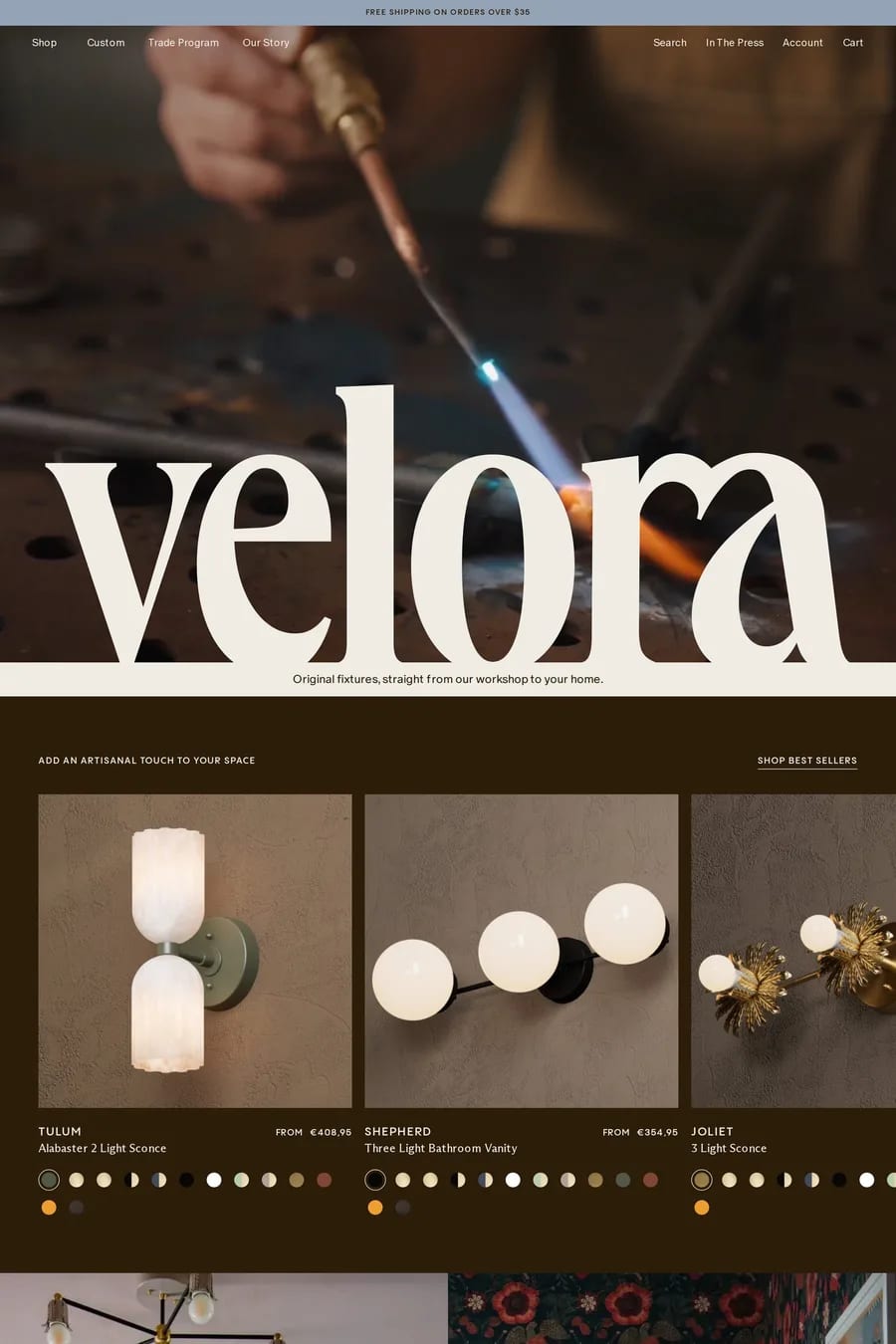
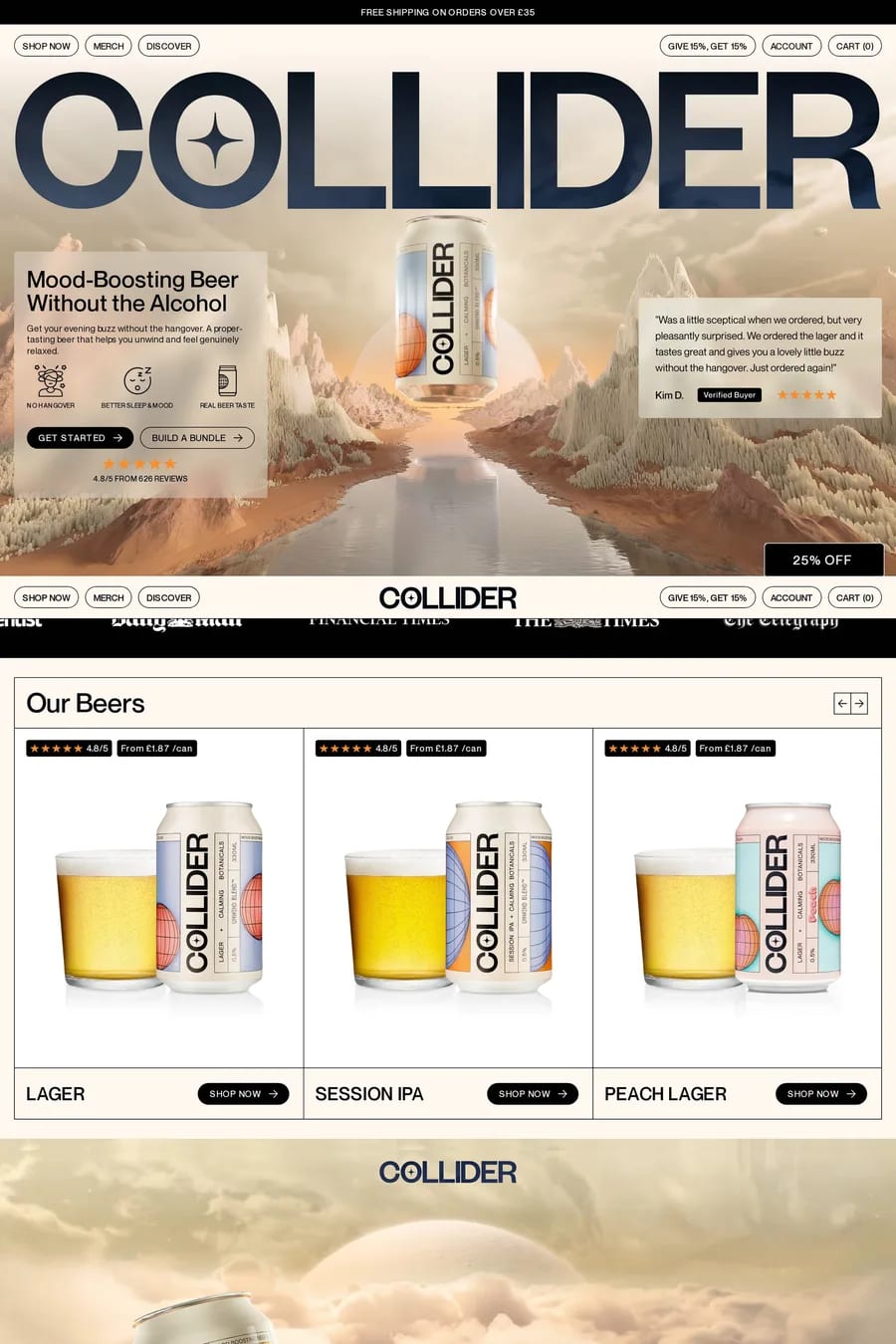
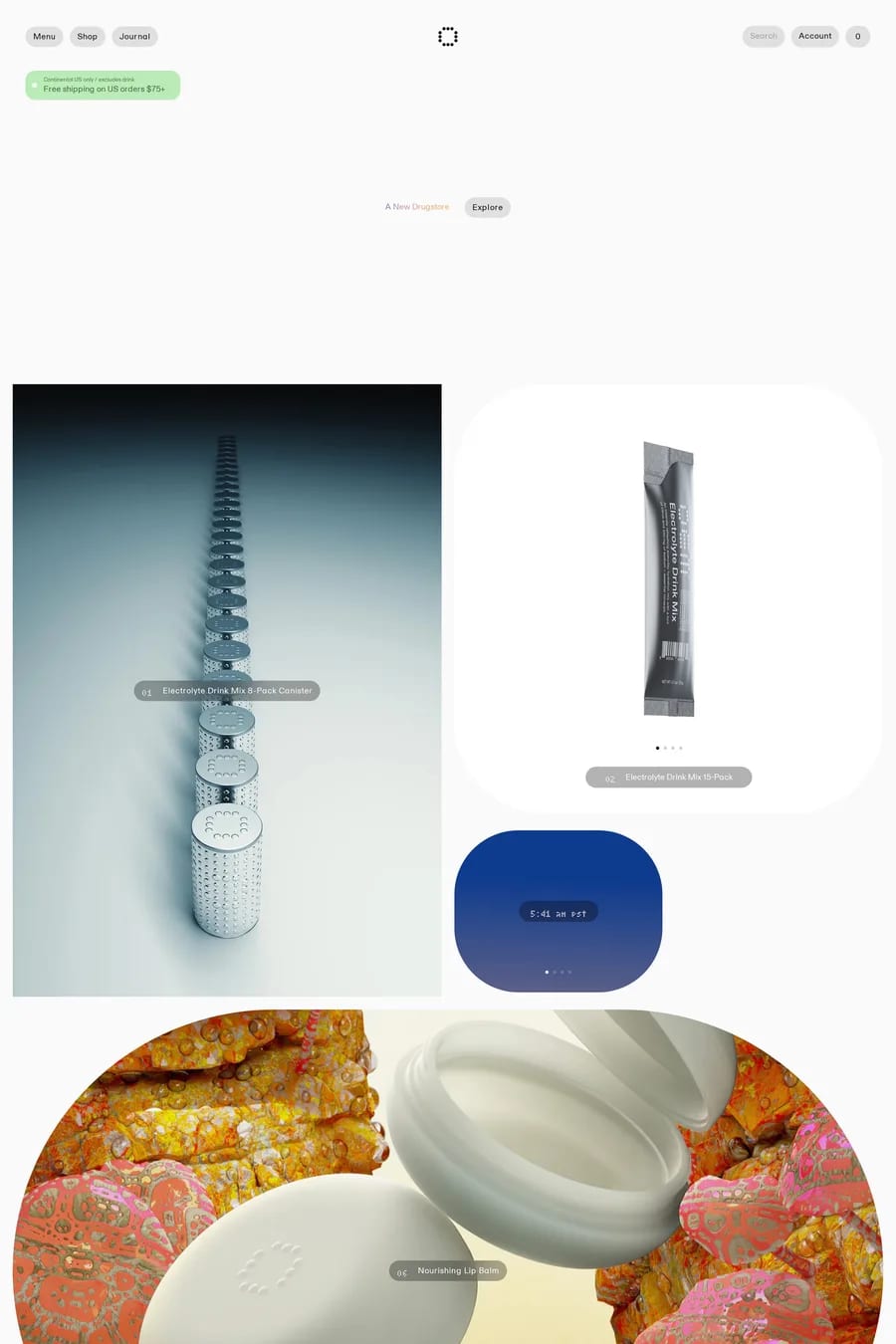
Shopify is the dominant e-commerce platform for independent brands and growing retailers. It handles the entire commerce stack — storefront, payments, inventory, shipping, fulfilment, customer accounts — so merchants can focus on the parts of the business that aren’t infrastructure. The best Shopify sites in this collection don’t look like Shopify sites at all: they look like custom-built brand experiences that happen to have fast checkouts. The weakest ones look exactly like the Dawn theme with a logo swap. The differentiator is rarely the platform; it’s how aggressively the brand customises out of the default theme and how seriously it takes the brand-as-design opportunity. Shopify gives you the engine. The body is up to you. Look at how the strongest Shopify sites in this collection handle the product page. It’s the highest-stakes screen on any e-commerce site, and the gap between a default Shopify product page and a fully custom one is enormous. The strongest brands invest in custom photography, custom typography, custom variant selectors, custom add-to-cart interactions, and custom upsell flows — every detail is a brand expression. Look at how they handle the checkout. Shopify’s default checkout is one of the most-tested conversion experiences on the internet and you usually don’t want to fight it, but you can extend it with brand-consistent post-purchase pages and email flows. The biggest mistake Shopify shops make is leaving the default theme largely intact and hoping the products do the heavy lifting. Browse Shopify shop examples for shops that escape the template feel, or compare against WordPress with WooCommerce for an open-source alternative.