The best AI startup website designs of 2026

AI has generated a predictable aesthetic — dark gradients, glowing particles, motion that signals capability it doesn't have. These seventeen sites resist that. The design choices feel earned: typefaces selected for what they say, interactions that explain the product rather than decorate it.

Bryn TaylorBryn Taylor·23 March 2026
Screenshot from The best AI startup website designs of 2026

AI has generated a predictable aesthetic: dark backgrounds, gradient glows, particle effects, motion that communicates capability it doesn't have. The sites in this roundup resist that. Some use the dark palette; most don't. What connects them is that the design choices feel earned rather than borrowed — a typeface selected for what it says, an interaction that explains the product rather than decorates it. These seventeen span software products, developer tools, enterprise platforms, browsers, and AI agents. All worth studying for different reasons.

LlamaIndexLlamaIndex mobile

LlamaIndex

The multicolour gradient accent — cyan, blue, magenta, orange in one stripe — would read cheap spread across the page. It doesn't, because it's used almost exclusively on the CTA buttons. That level of restraint is harder to maintain than it looks. The monospace labels throughout give the page a developer-document quality that matches what LlamaIndex actually builds.
GranolaGranola mobile

Granola

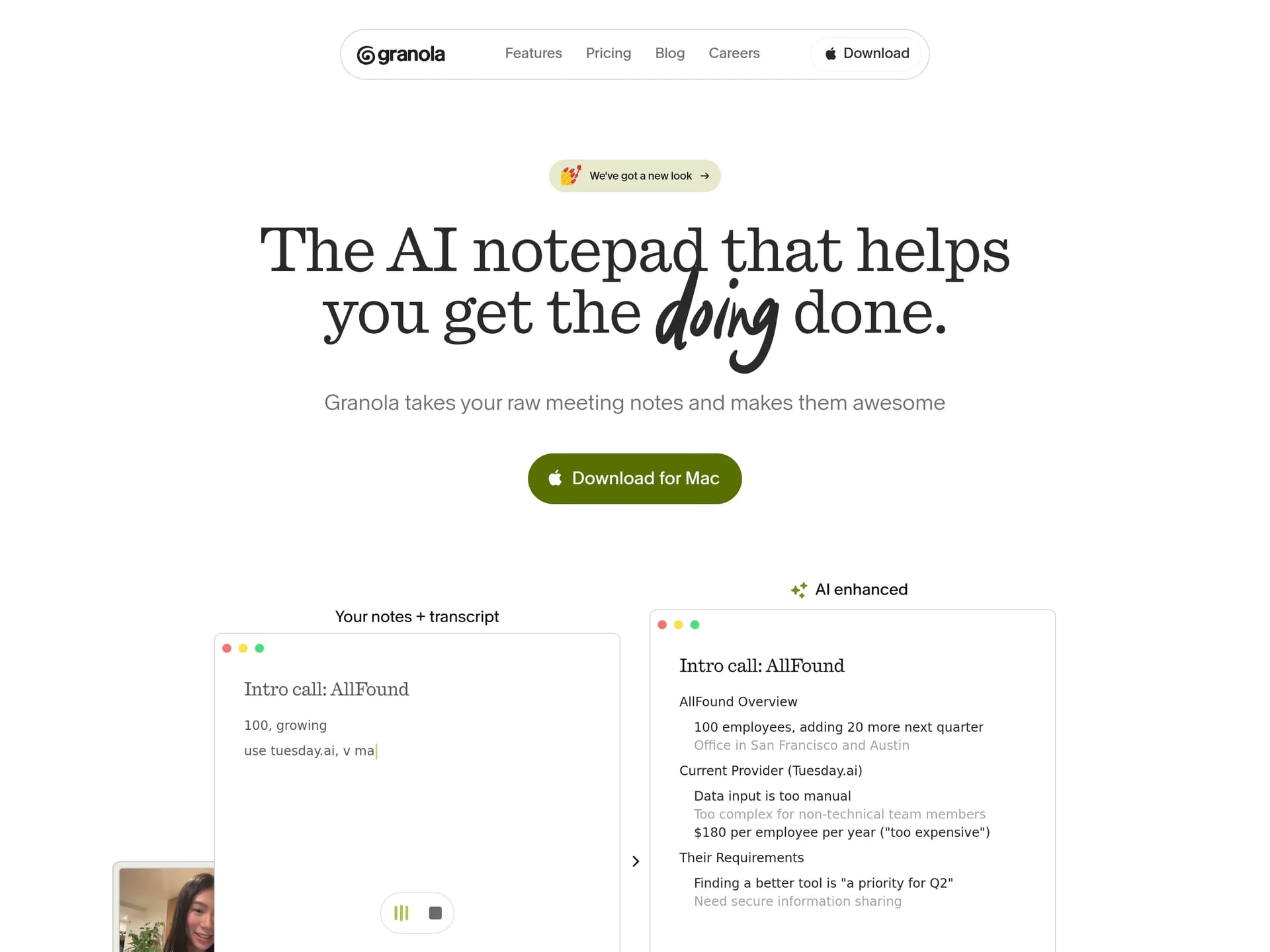
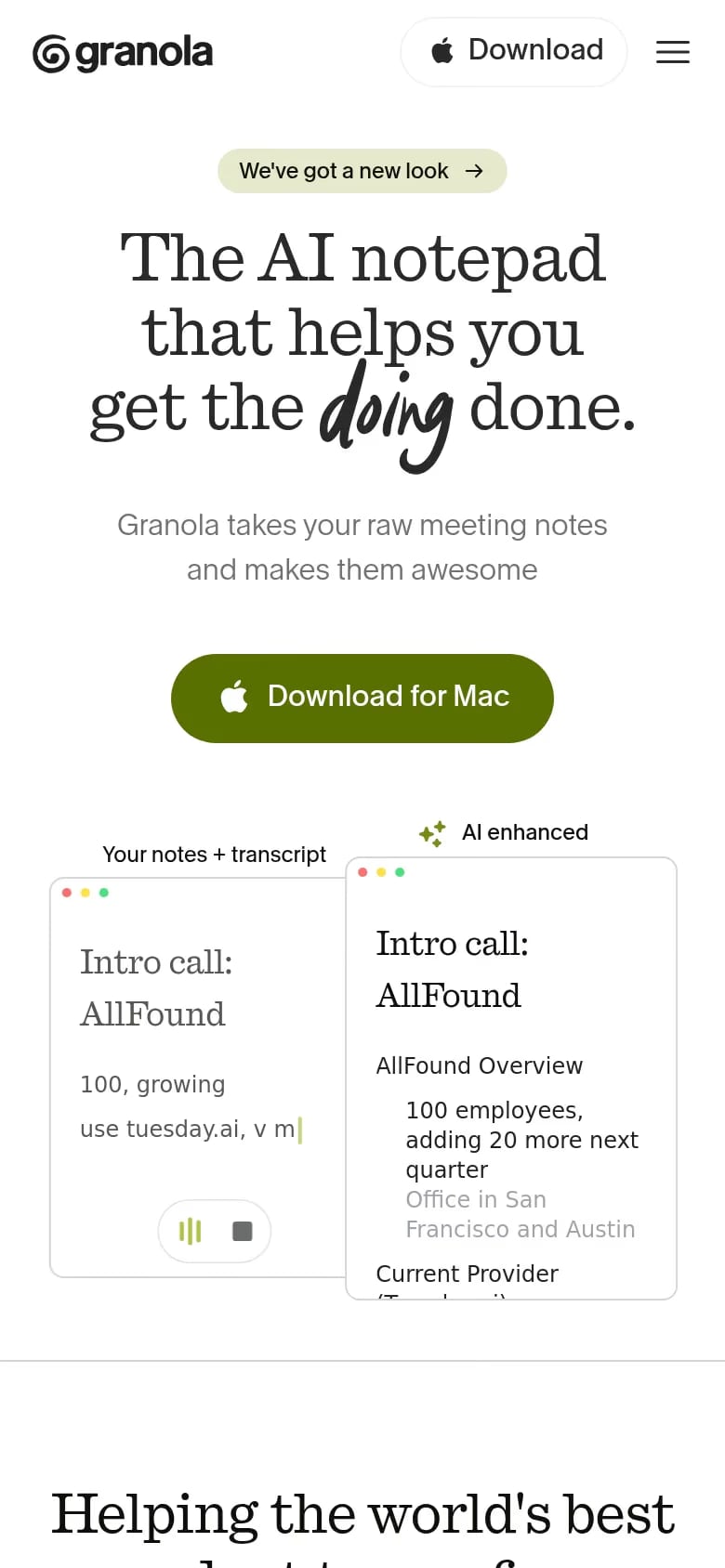
Two marquee strips run in opposite directions — action items as green pill buttons, one track forward, one back. I love that this is the first thing you see: not a product shot, but the thing the product makes. Below that, a note card scrolls through meeting content real enough to make you reach for your own notes. Quadrant as the headline typeface, sage green and white.
TabsTabs mobile

Tabs

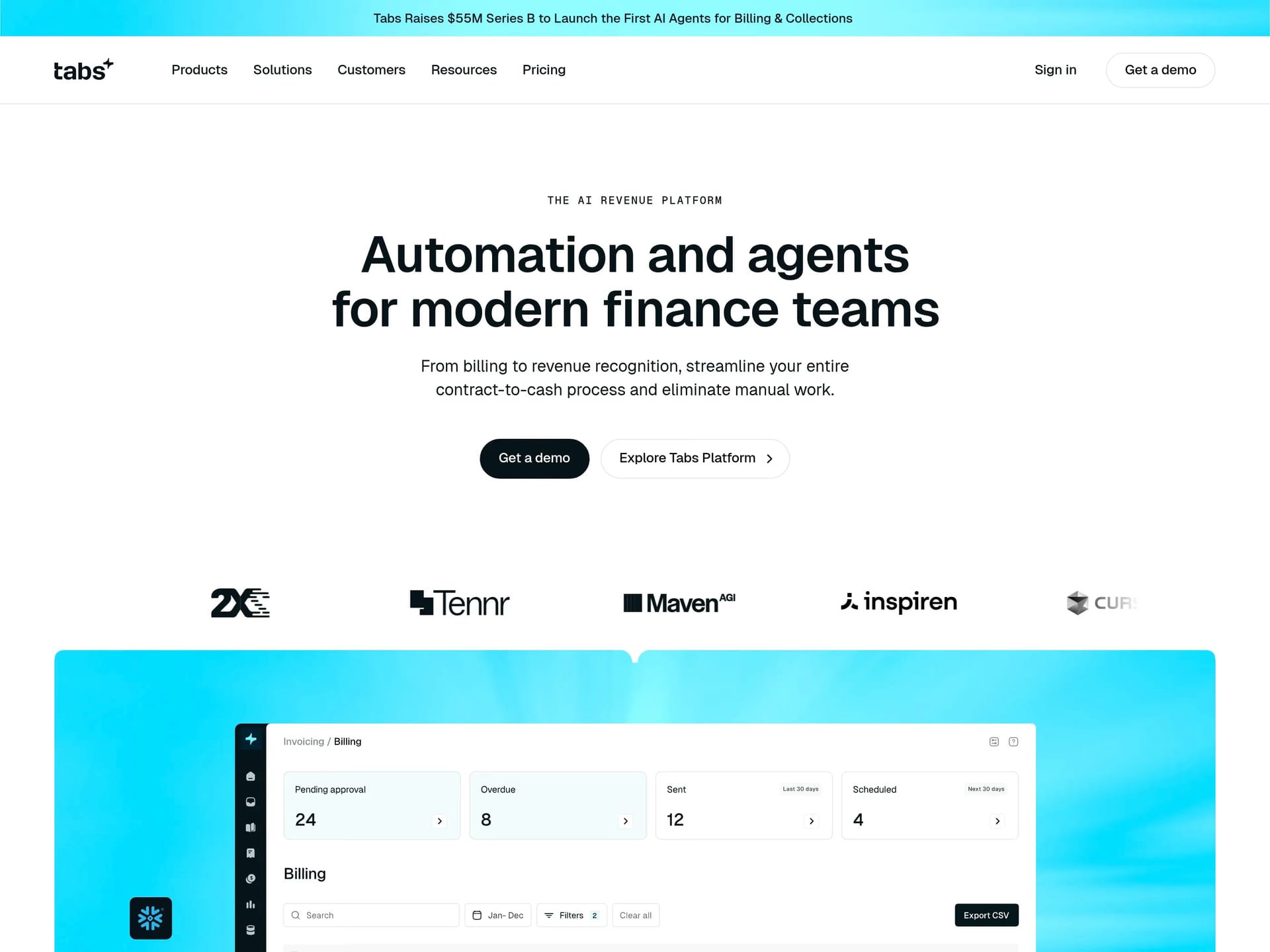
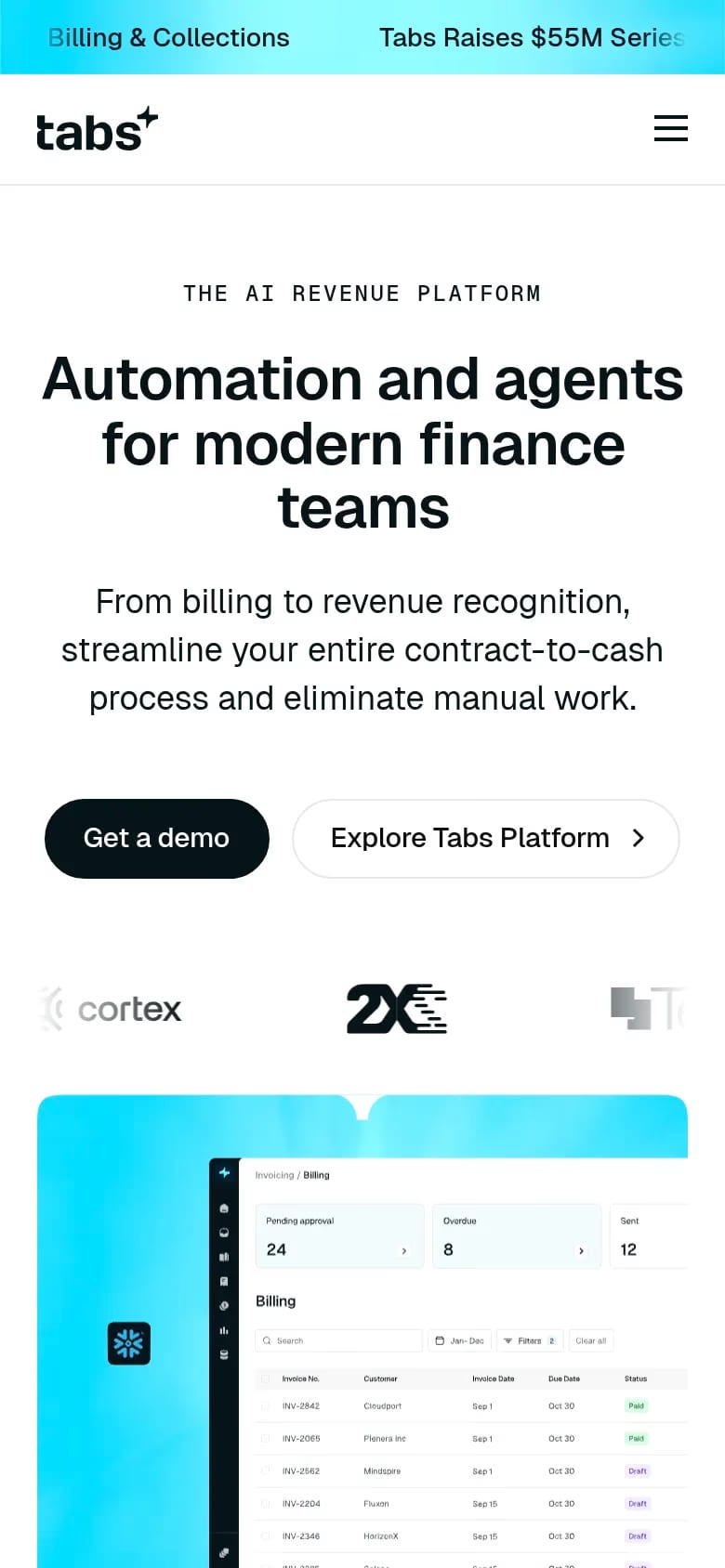
The hero goes uppercase — "The AI REVENUE platform" — and pairs it with a serif at display scale. That's more confident than most finance tools let themselves be. Rive handles the product demonstrations, which means they're genuinely interactive rather than screen recordings dressed up as interactions. Midnight blue, electric cyan, bento grid — a dashboard aesthetic that precedes any commitment from the visitor.
LegoraLegora mobile

Legora

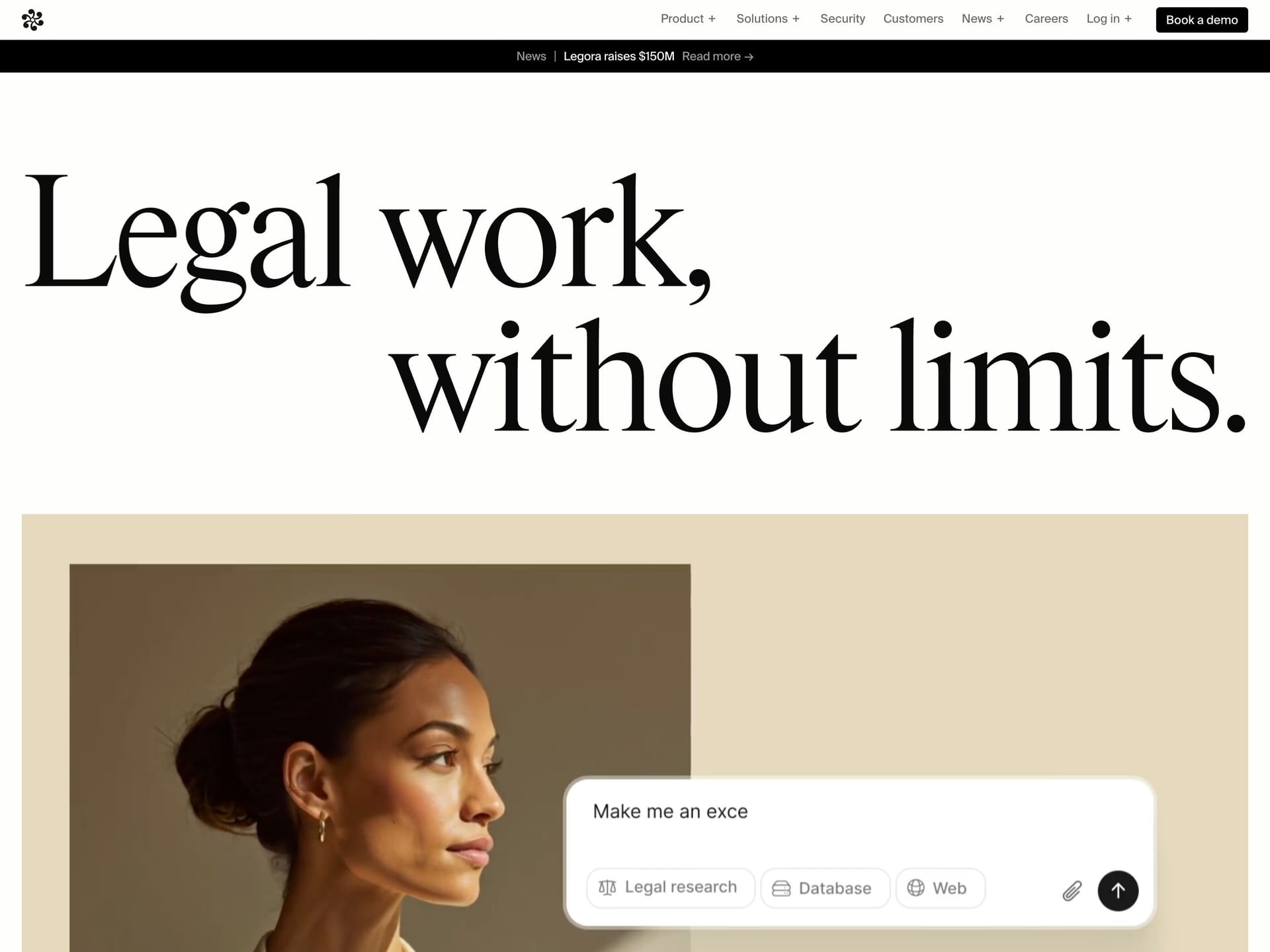
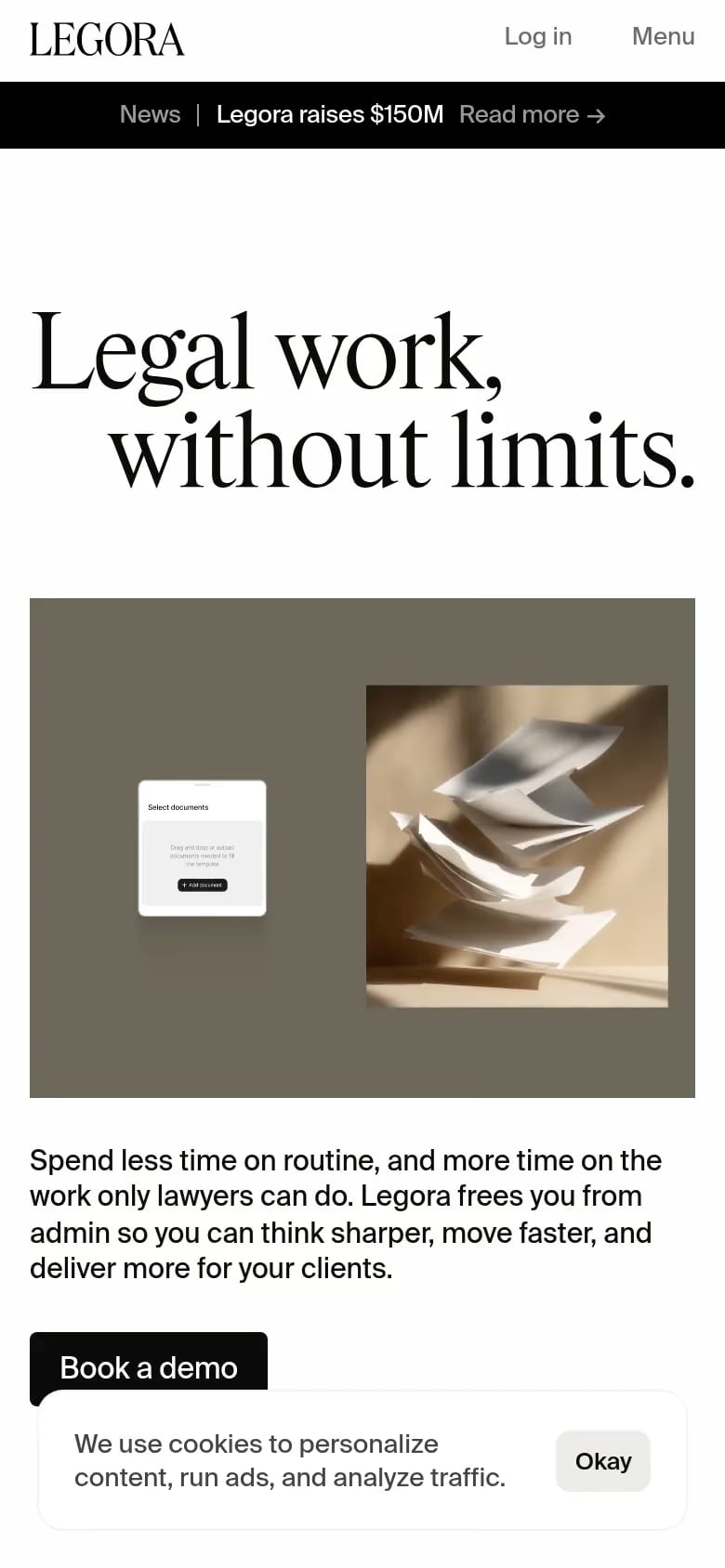
Three display font families — Suisse Intl for body, Rhymes Display and Domaine Display Narrow for the heavy lifting. Most sites pick one. The colour palette is warm and restrained: off-white backgrounds, lime green (#d0f289) and warm orange (#e68846) as the accent pair. For a legal AI company, none of this is the expected palette.
SequenceSequence mobile

Sequence

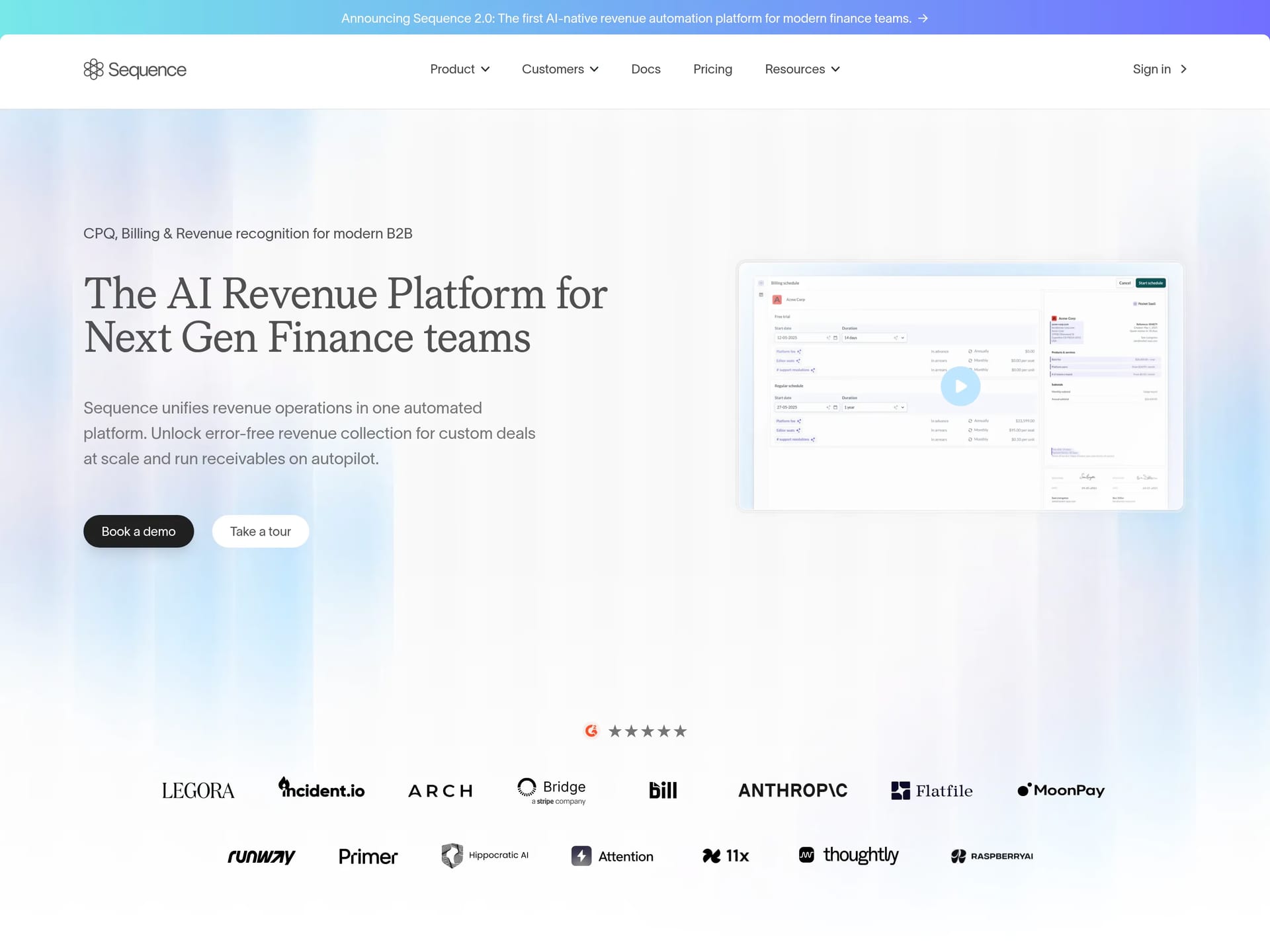
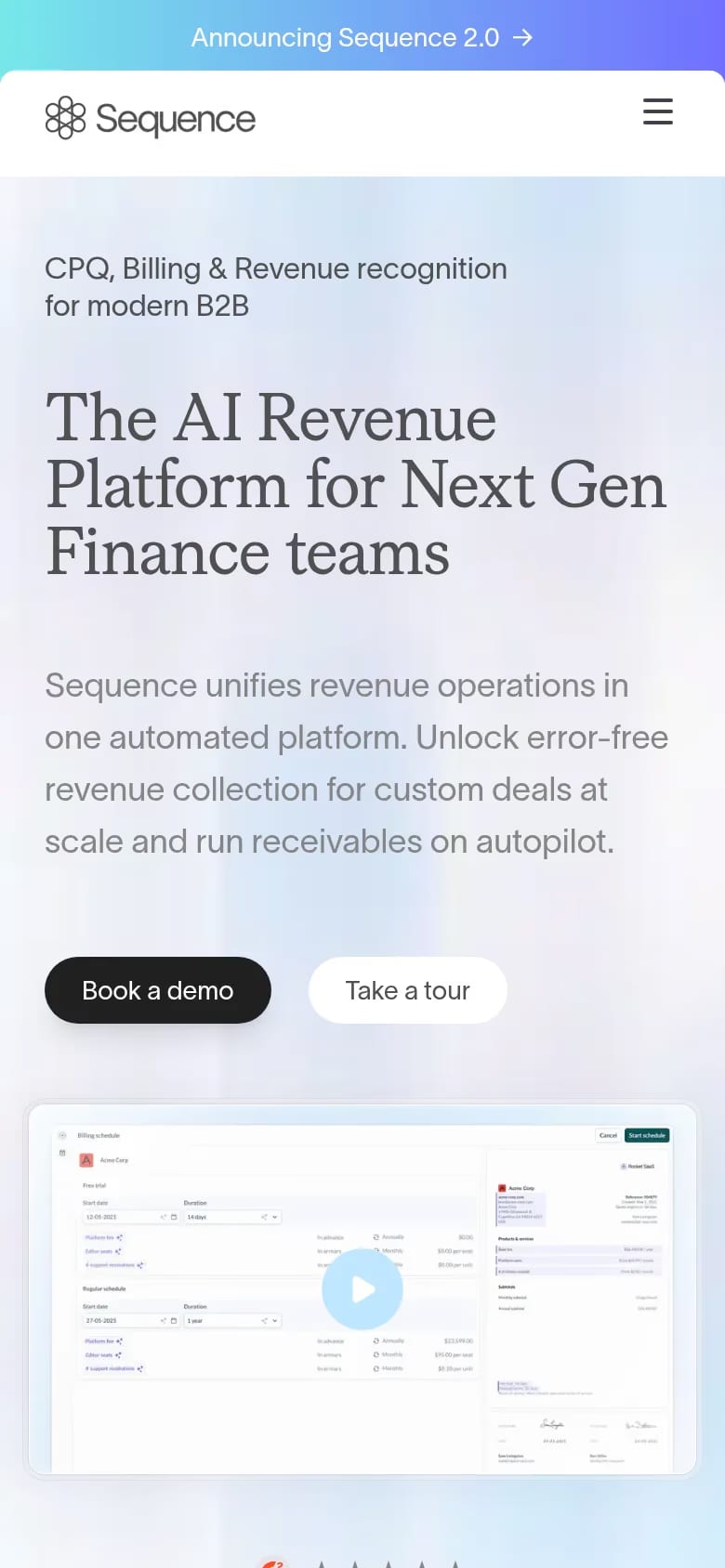
The serif headlines run light-weight, with tracking wide enough to breathe. Against the off-white background it reads closer to a financial publication than a billing platform. The accent orange (#FF4D25) is used almost nowhere — which means when it appears, it lands. The hero fades out at the bottom with an inset mask gradient, dissolving into the page rather than cutting to it.
ChatGPT AtlasChatGPT Atlas mobile

ChatGPT Atlas

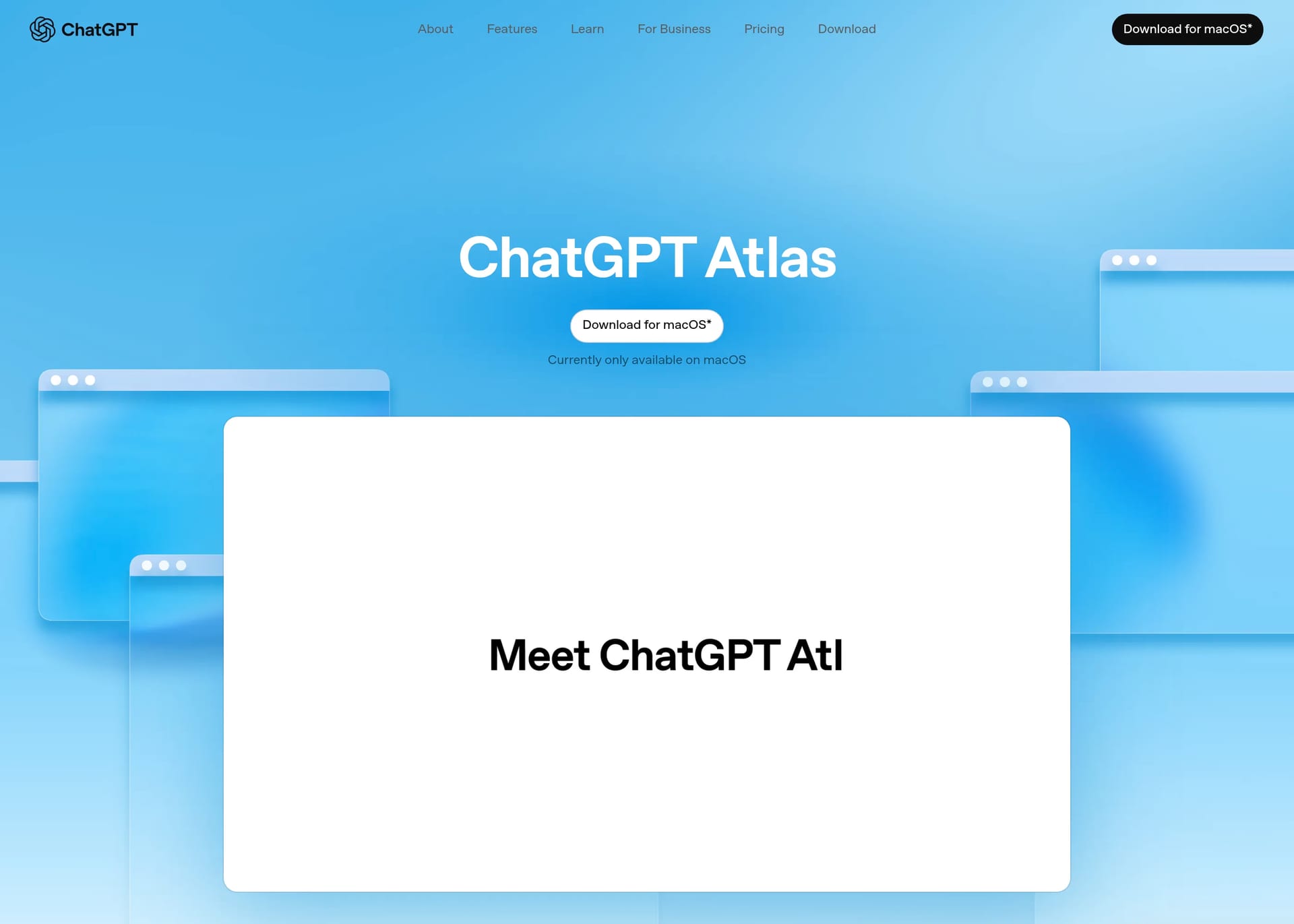
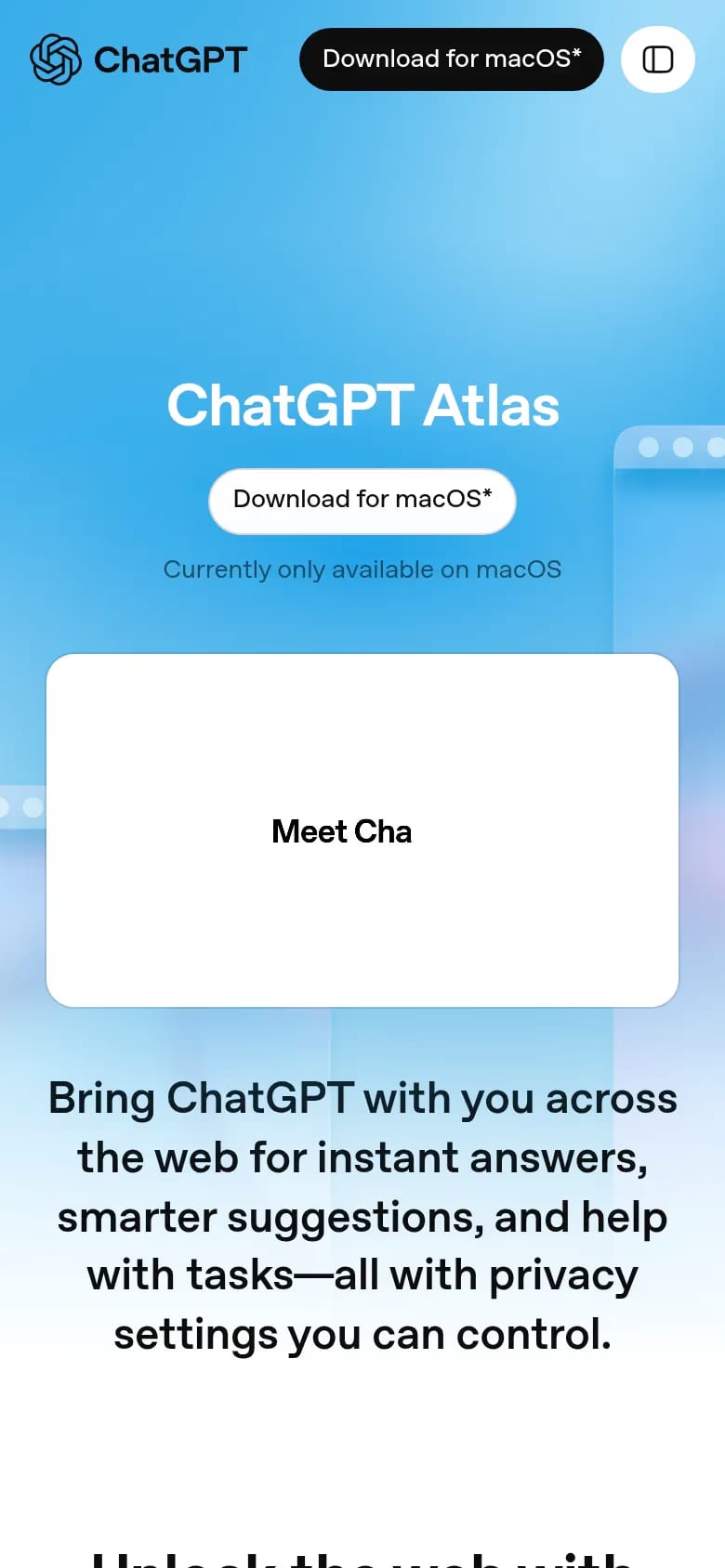
Dark, gradient-lit, video doing the narrative work. The big type is the hero — no product diagram, no feature grid, just words at enough scale to become the image. This is a page that only makes sense at OpenAI's scale: the name does the work that explanation would need to do elsewhere. Efficient rather than remarkable, which might be the point.
CartesiaCartesia mobile

Cartesia

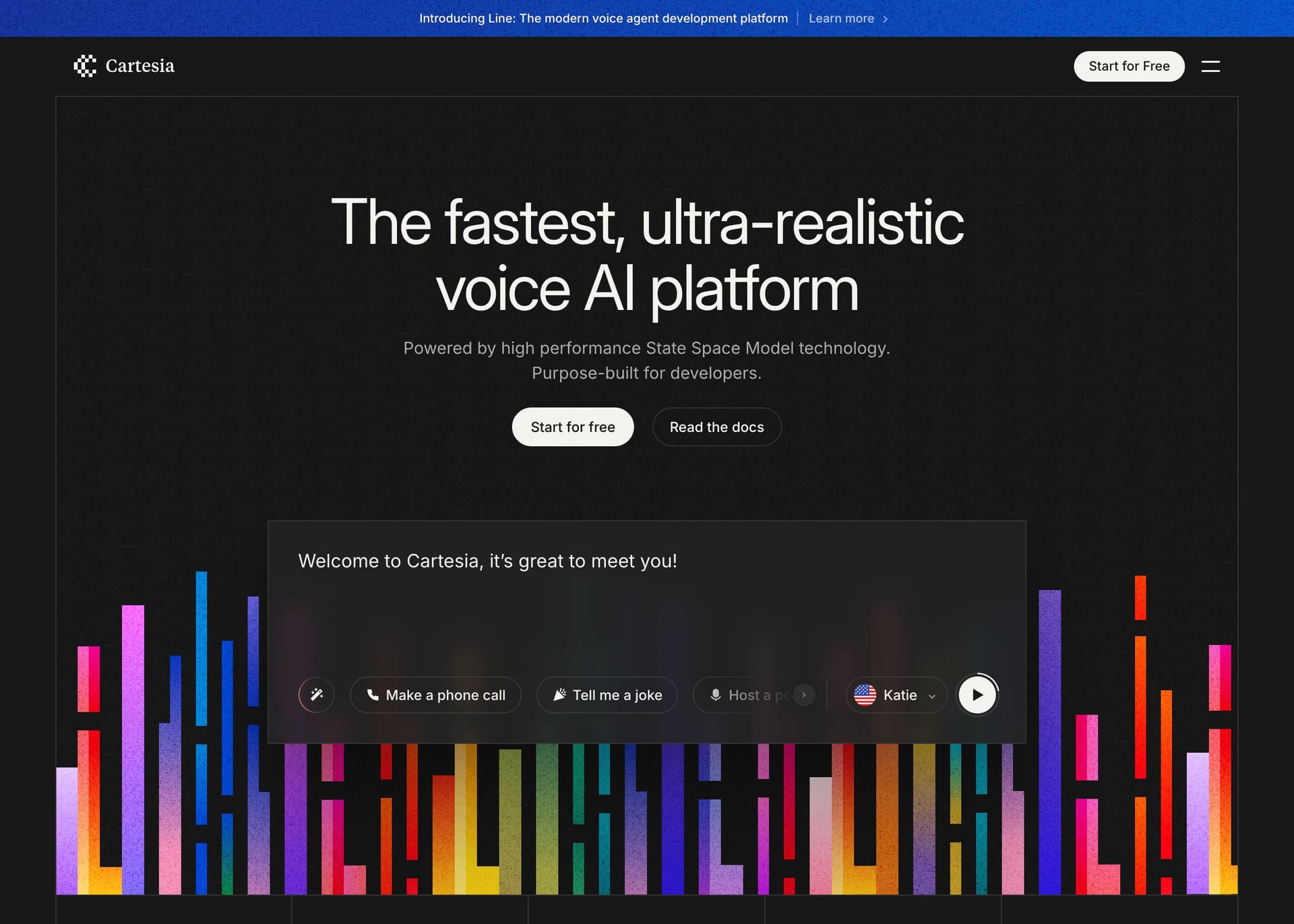
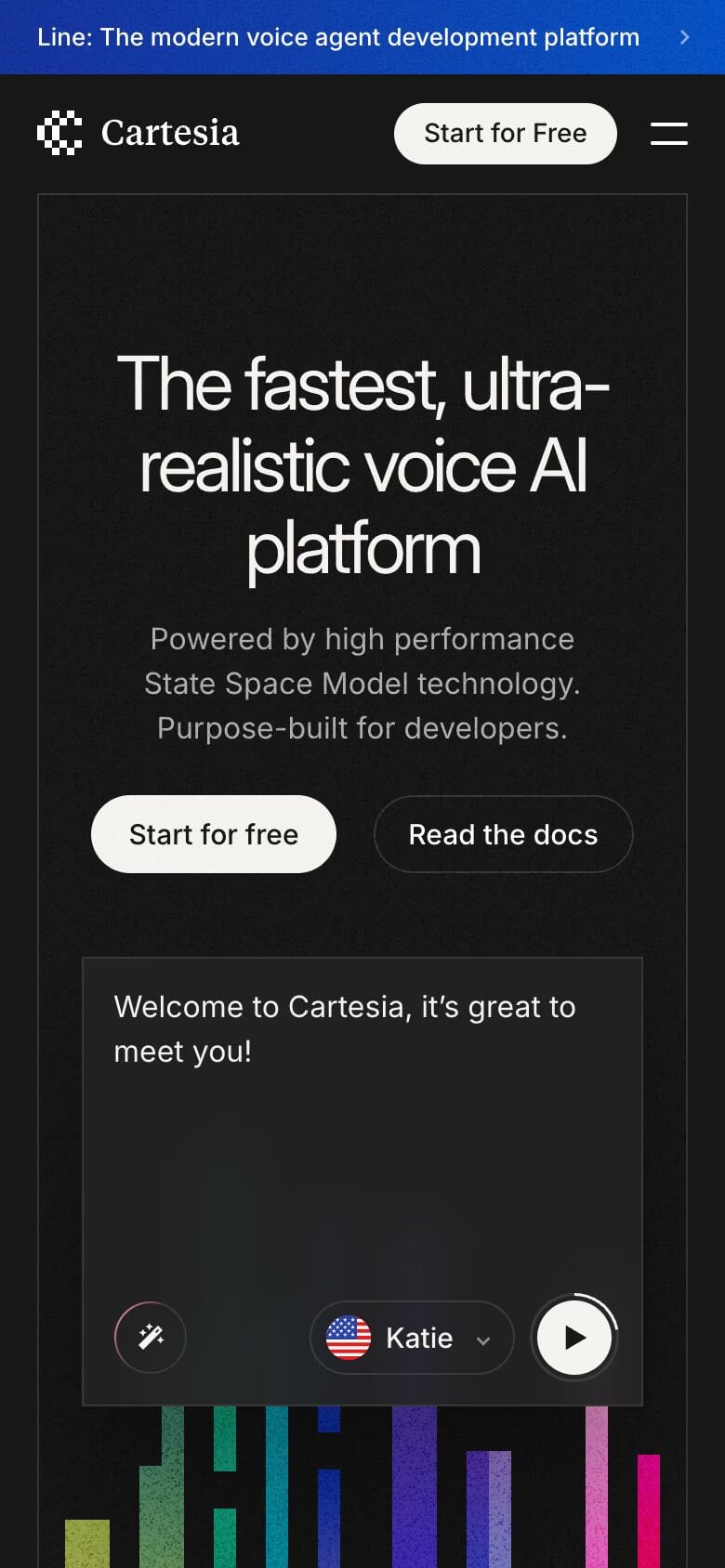
Deep near-black (#181818), Inter and Tiempos running alongside each other, Fragment Mono for the technical elements. The hover states use soft-light blend modes rather than colour shifts — a small thing that makes every interaction feel textured rather than flat. Similar restraint to Sequence, but where Sequence uses a serif to signal finance, Cartesia uses silence. The product is sound. The site is quiet.
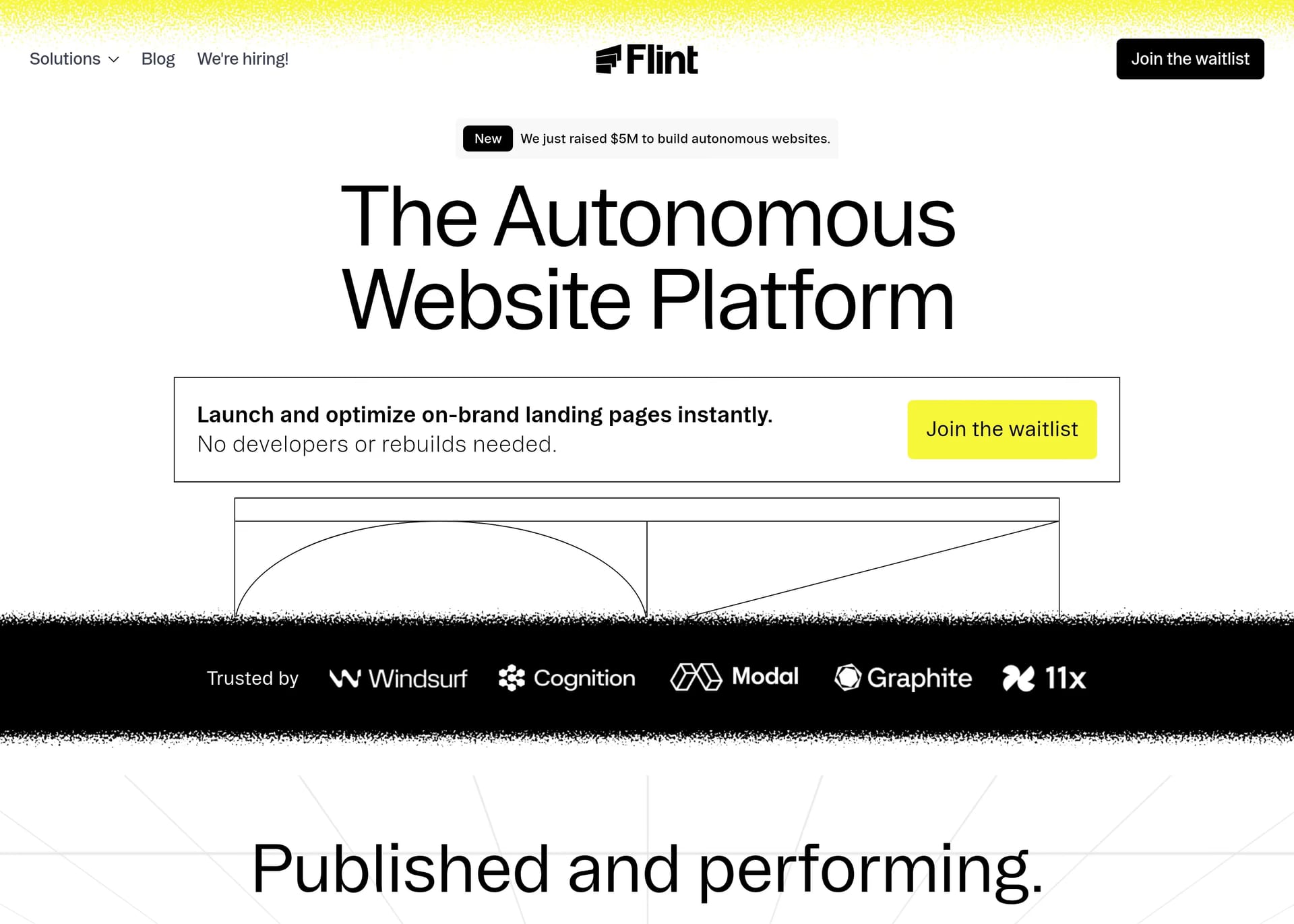
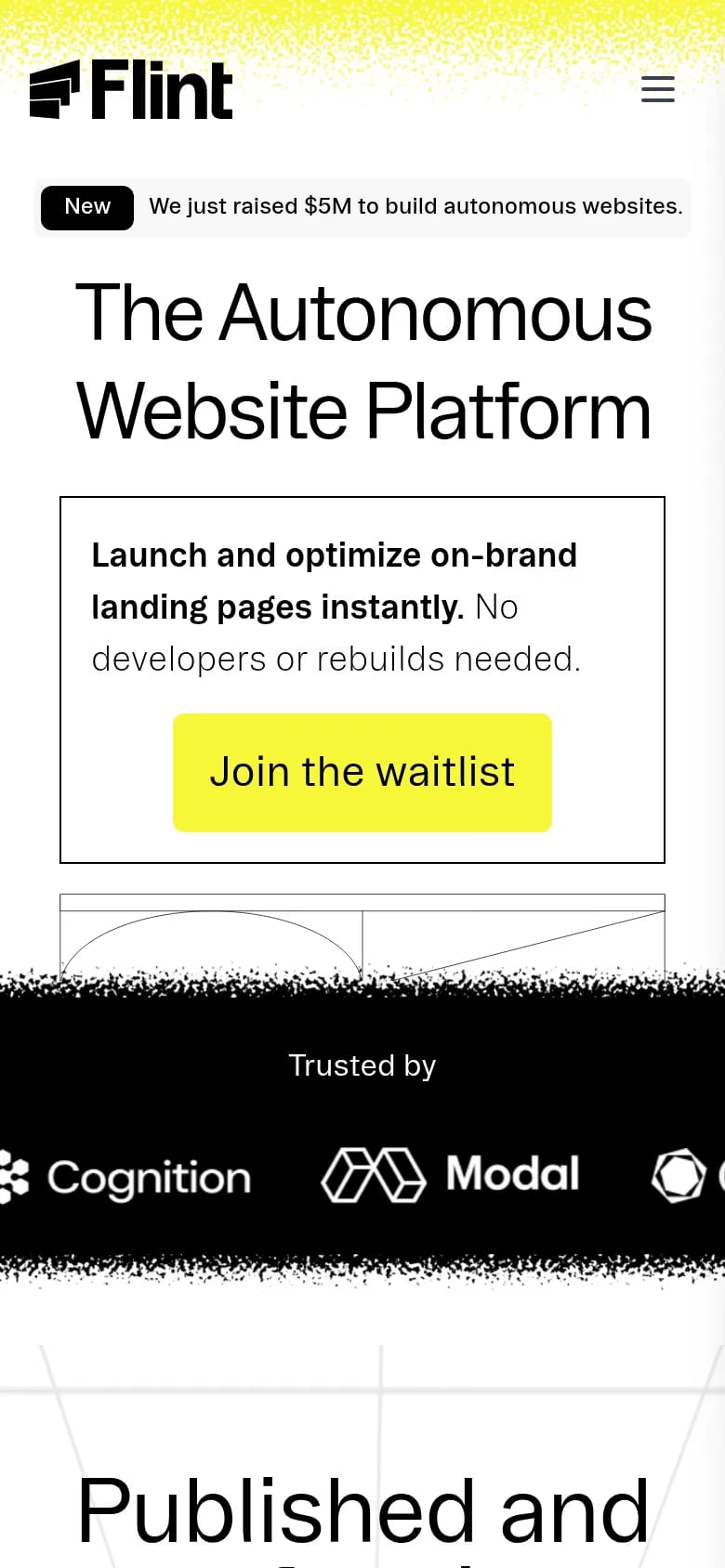
FlintFlint mobile

Flint

Dark base with cyan-turquoise buttons. The hero has an interactive textarea with prompt suggestions rotating through it — "1:1 Account", "Ad campaign", "Comparison page" — so you understand the use cases before you've read a sentence. Two carousels run below: customer logos, and actual landing pages the tool has generated. Showing output rather than promising it.
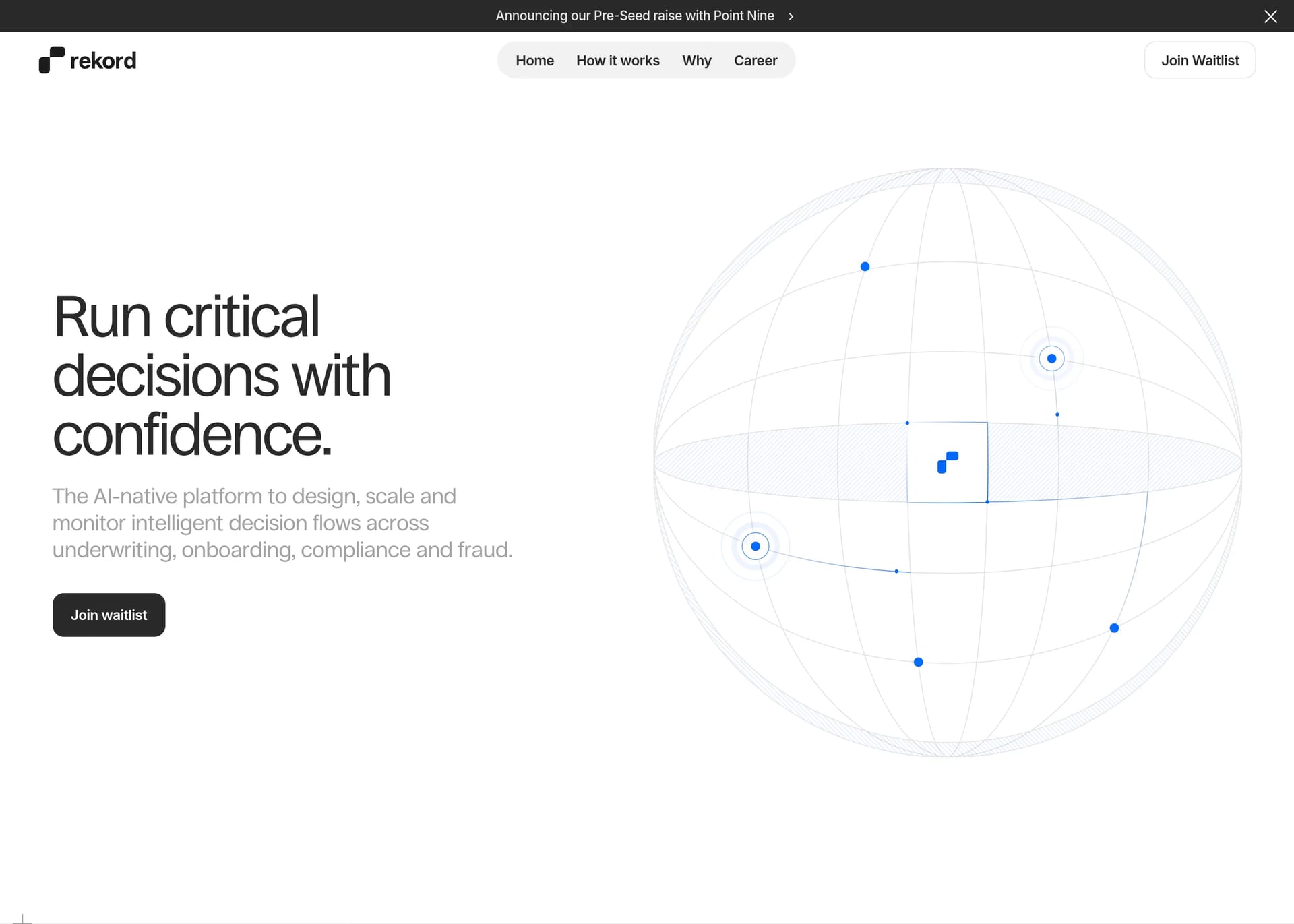
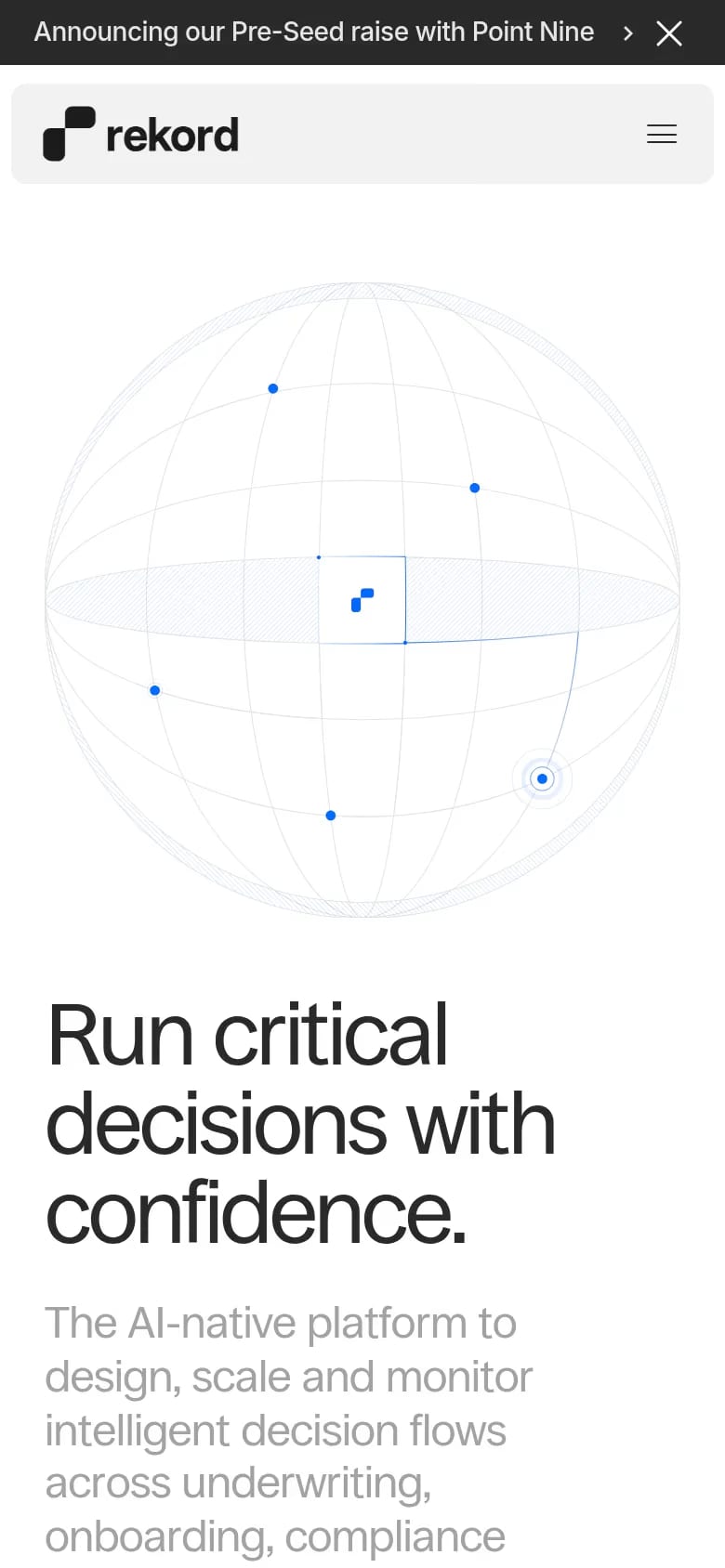
RekordRekord mobile

Rekord

Ronzino for the headlines — a typeface with a geometric, European precision you don't see often in this space. Letter spacing is tight (-0.04em), giving the display type a measured feel, like every word was placed intentionally. Small geometric squares repeat at component corners. One small detail, used consistently rather than escalated.
QuinQuin mobile

Quin

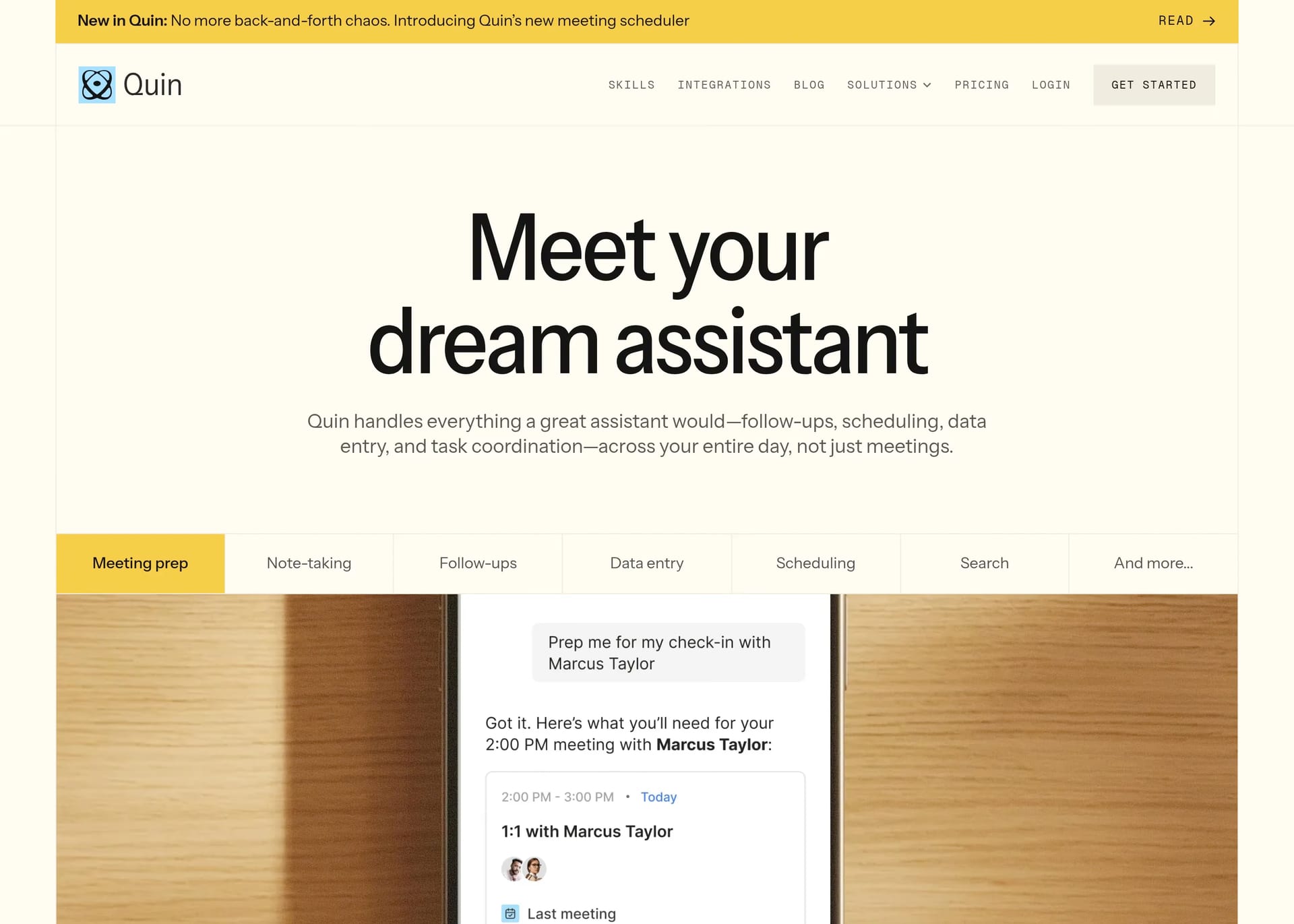
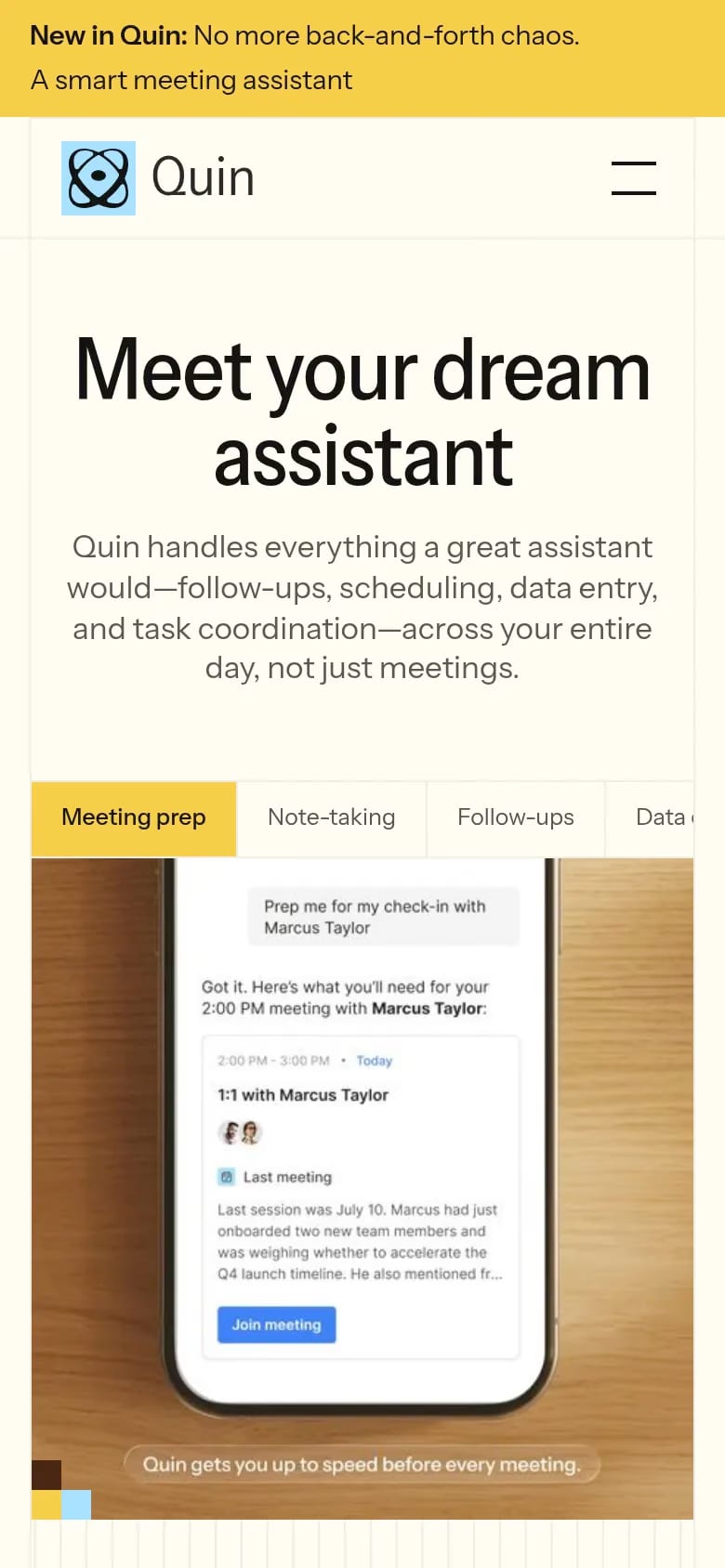
Three typefaces with typographic features switched on — "Round dots" and "Alternate" glyphs on Geist Mono and Instrument Sans, giving the letterforms actual character. Headlines fade in word by word with a blur-to-clear transition. I have reservations about the pricing slider: live-updating metrics are clever, but the interaction is doing work that clearer copy should probably do. The visual ambition is higher than the product clarity.
ArcadeArcade mobile

Arcade

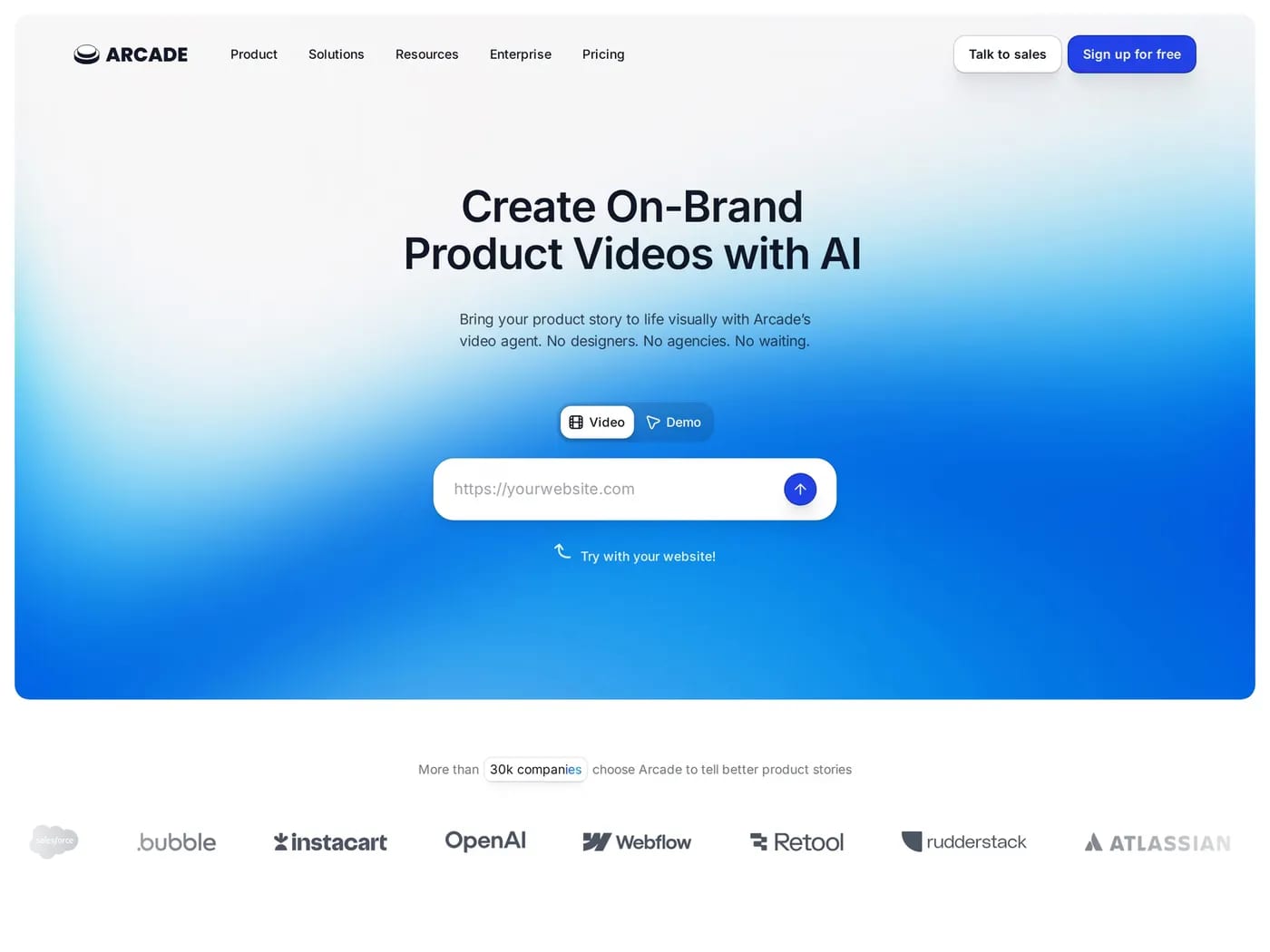
Vivid blue (#2142E7) running through gradients, with Press Start 2X — a pixel font — appearing as a decorative accent alongside Inter. The contrast between pixelated type and clean sans-serif either works for you or it doesn't; I find it charming, but that's not a universal reaction. The demo/video toggle is the centrepiece: a smooth tracker bar slides between content types with a cubic-bezier timing that makes it feel mechanical in a good way.
PlayerZeroPlayerZero mobile

PlayerZero

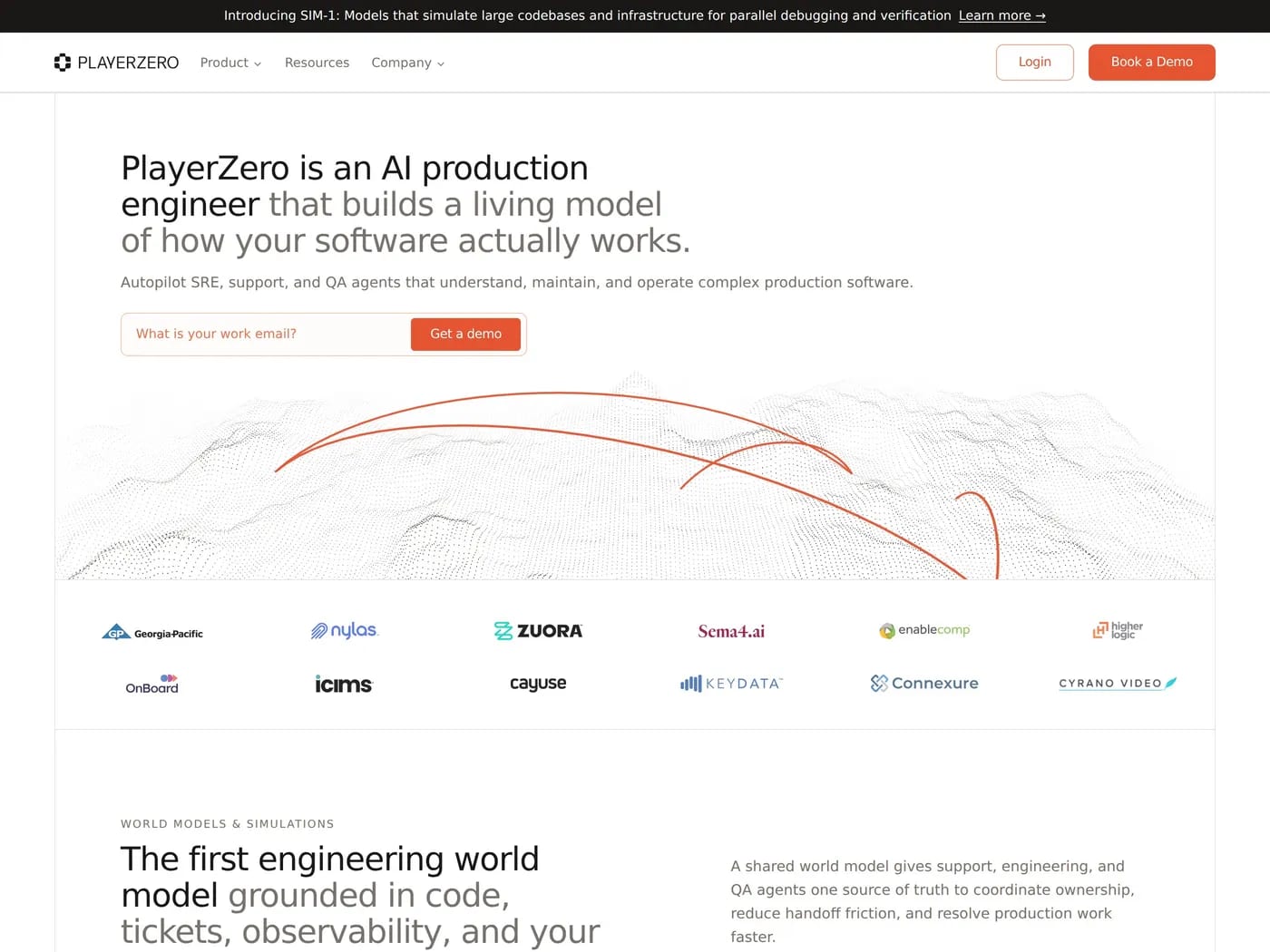
Dark throughout, Geist and Geist Mono as the typographic pair. The main content area has borders on both sides (border-x), framing it like a viewport rather than a webpage — a structural choice that gives the whole thing a terminal quality. The product demonstrations are specific rather than abstract: ticket triage, parallel simulations, multi-team coordination. The AI pitch has something concrete to hold onto.
Gradient LabsGradient Labs mobile

Gradient Labs

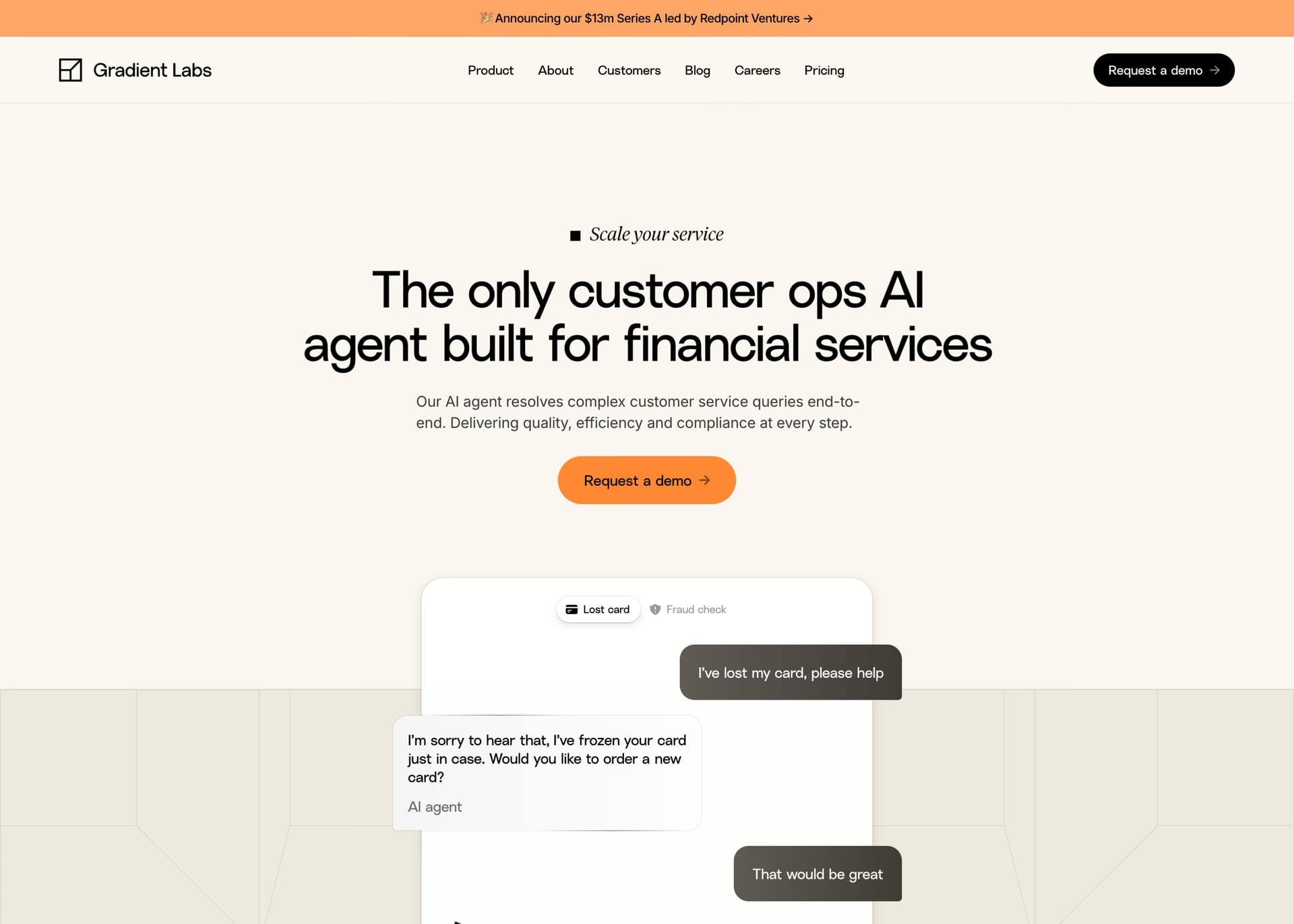
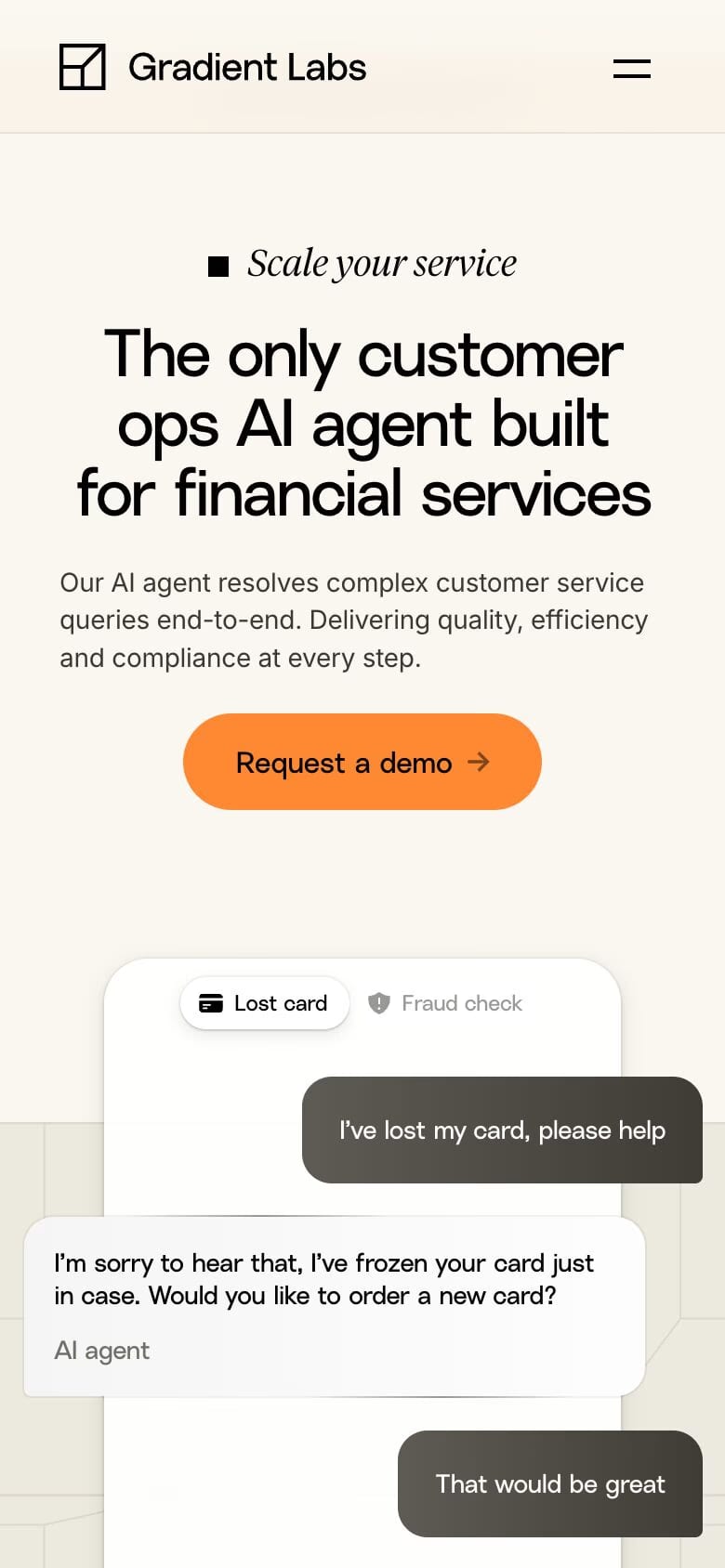
Linear Sans and Tiempos — the geometric sans and the editorial serif keeping each other honest. Isometric illustrations and line-based graphics, scroll-triggered reveals. The visual system is tighter than the copy, which never quite finds something specific to say. Worth studying for the illustration style rather than the full package.
LiveblocksLiveblocks mobile

Liveblocks

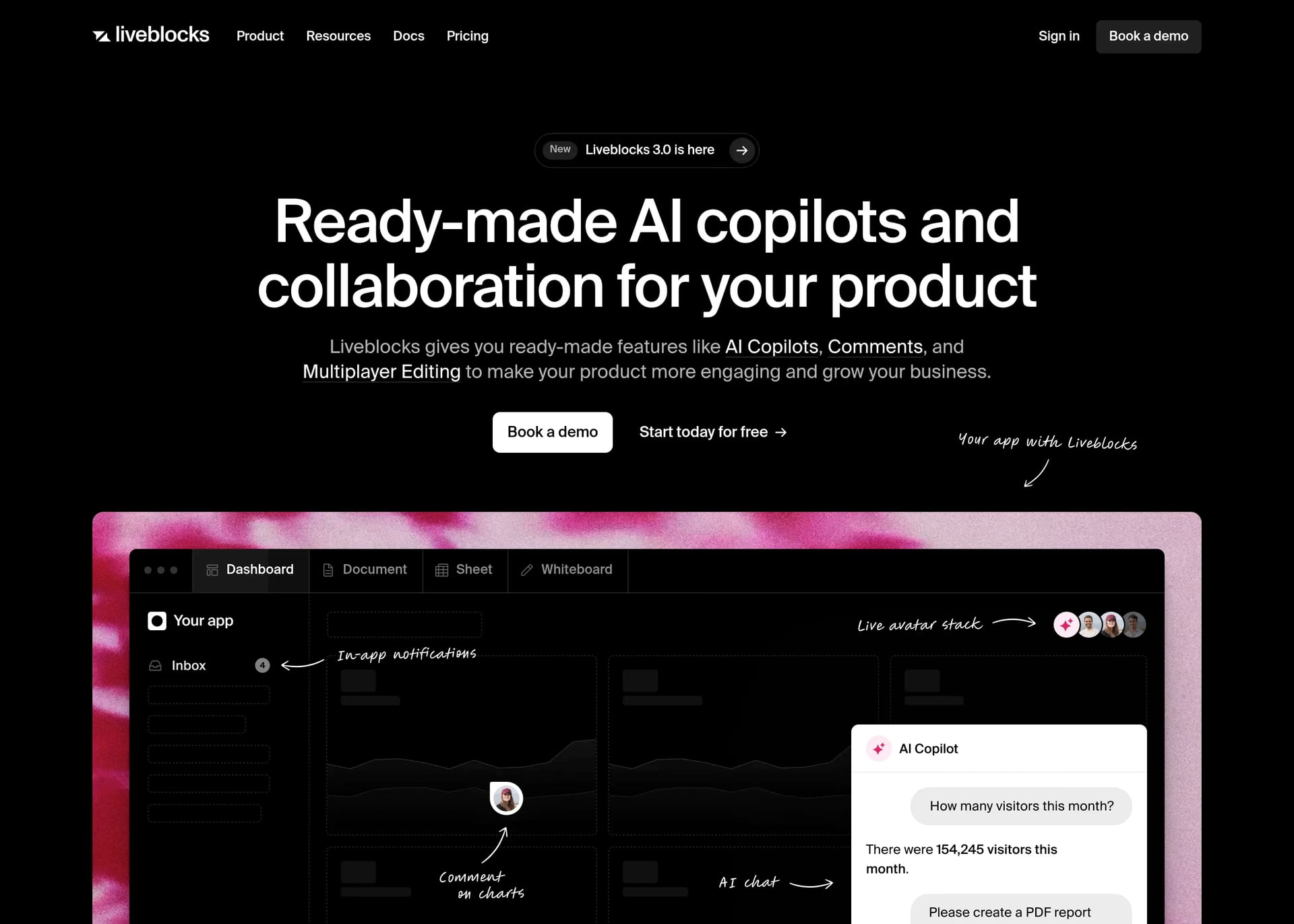
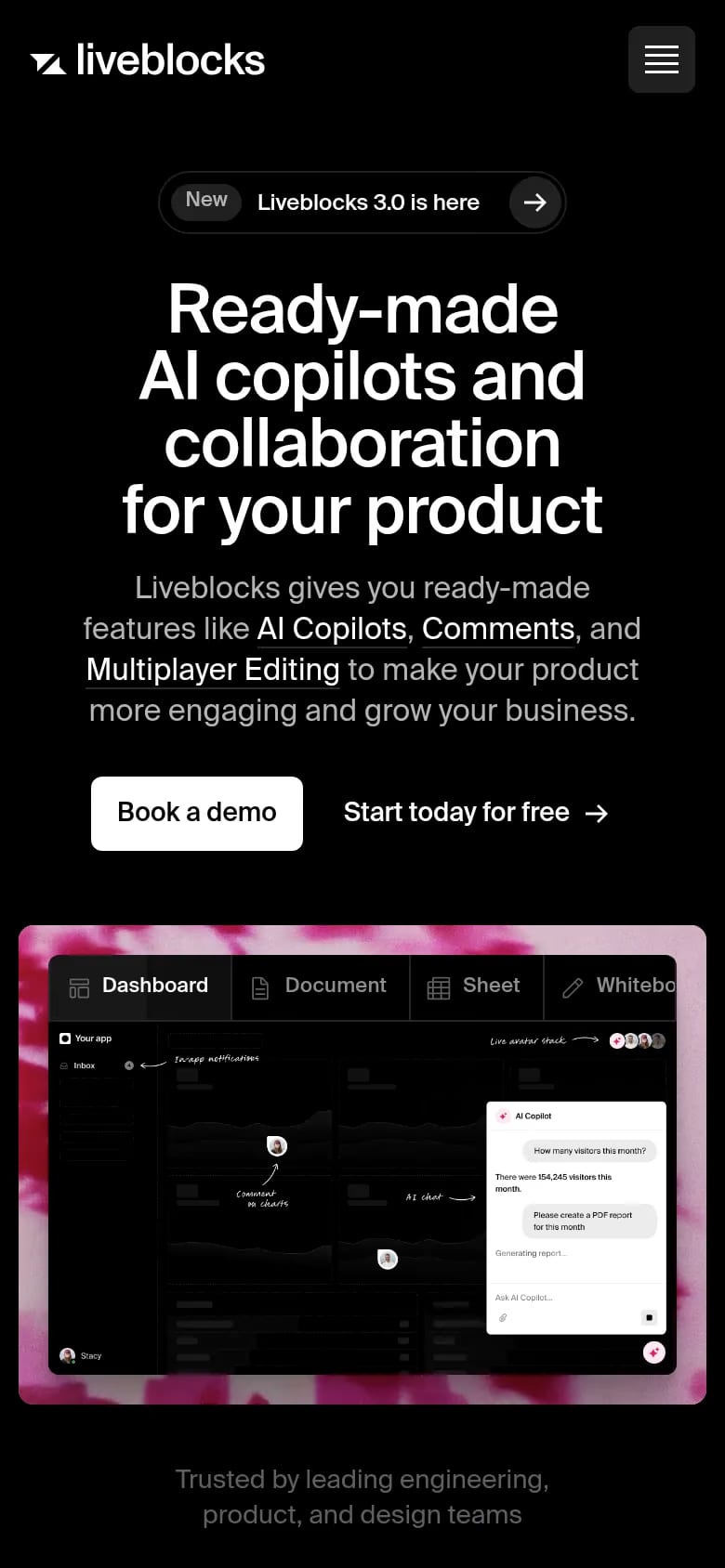
Dark background, radial gradient in the hero, SuisseIntl throughout, teal and cyan as accent colours. The bento grid uses a textured background image — subtle, but it stops the cards from floating. Code snippets embedded directly in the product demonstrations, not tucked behind a "For developers" tab: if your pitch depends on implementation quality, put the implementation in the pitch. The bento layout is starting to feel like a genre rather than a choice at this point, which this one can't fully escape.
WindsurfWindsurf mobile

Windsurf

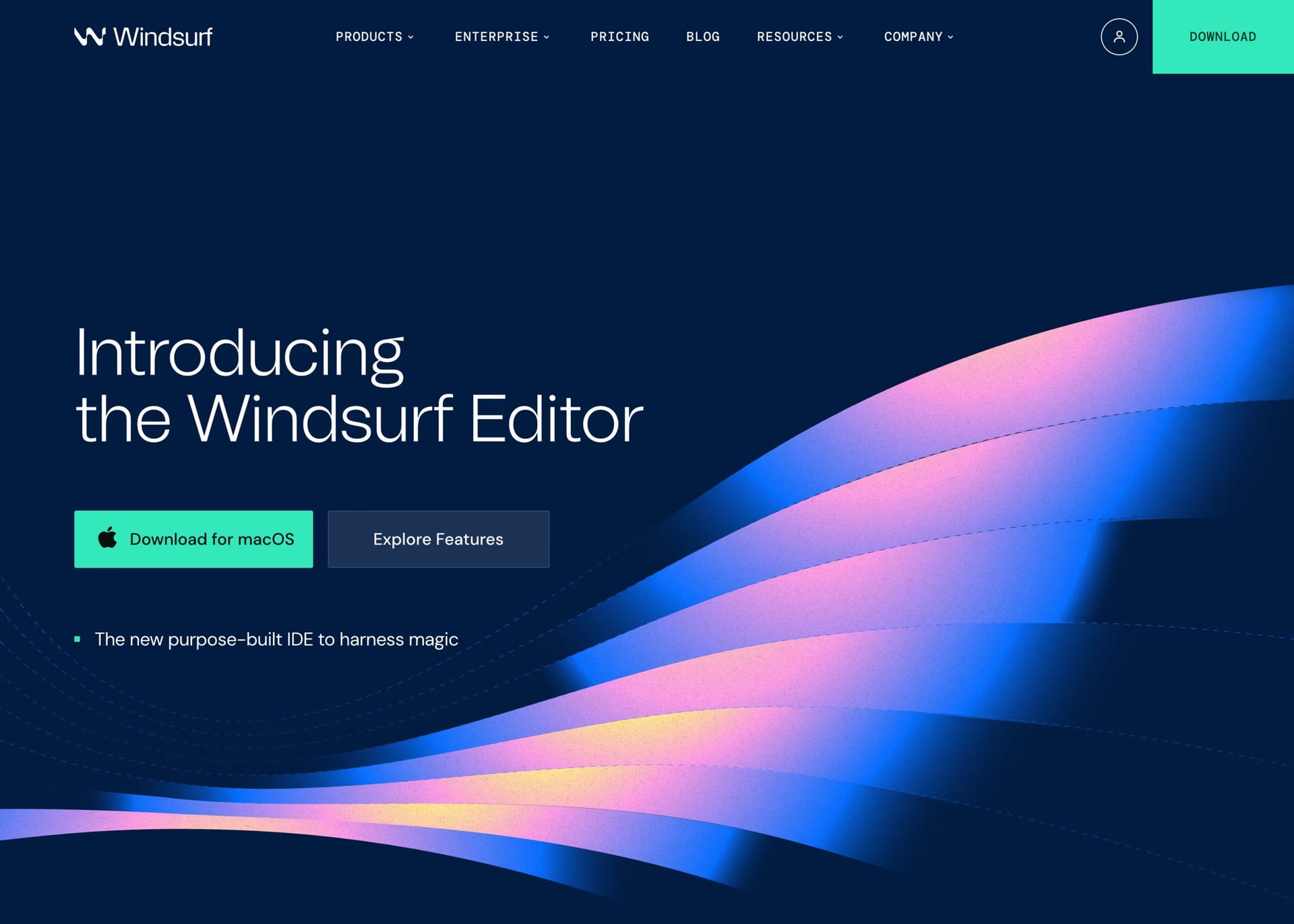
Deep navy backgrounds with a decorative SVG wave running behind the hero, pointer-events-none so it never interrupts scrolling. Cyan and aqua for interactive elements. The heading letter spacing is unusually tight (-0.123rem), giving the typography a precision you feel before you clock it. "Where developers are doing their best work." The copy is confident enough not to explain itself.
DiaDia mobile

Dia

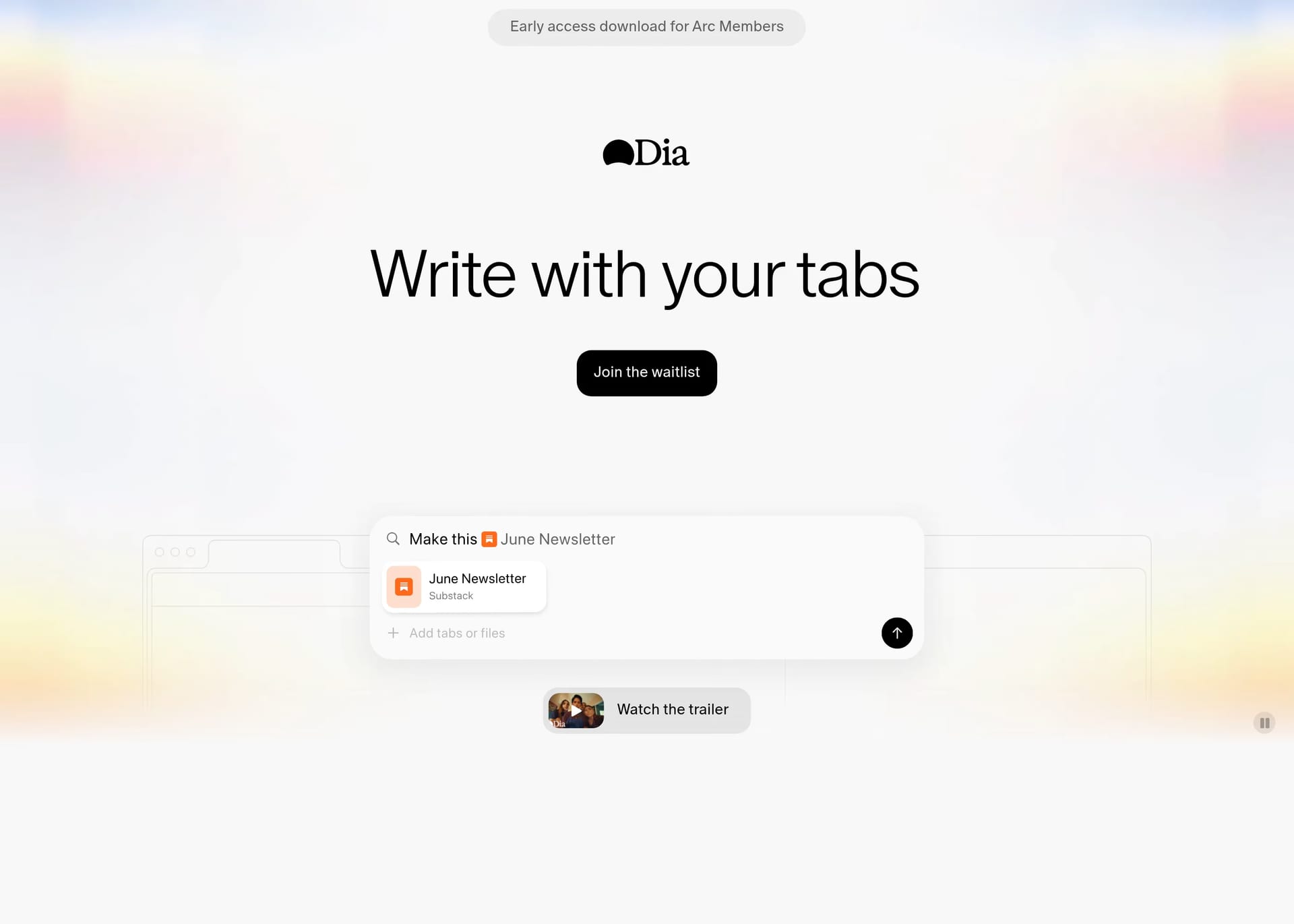
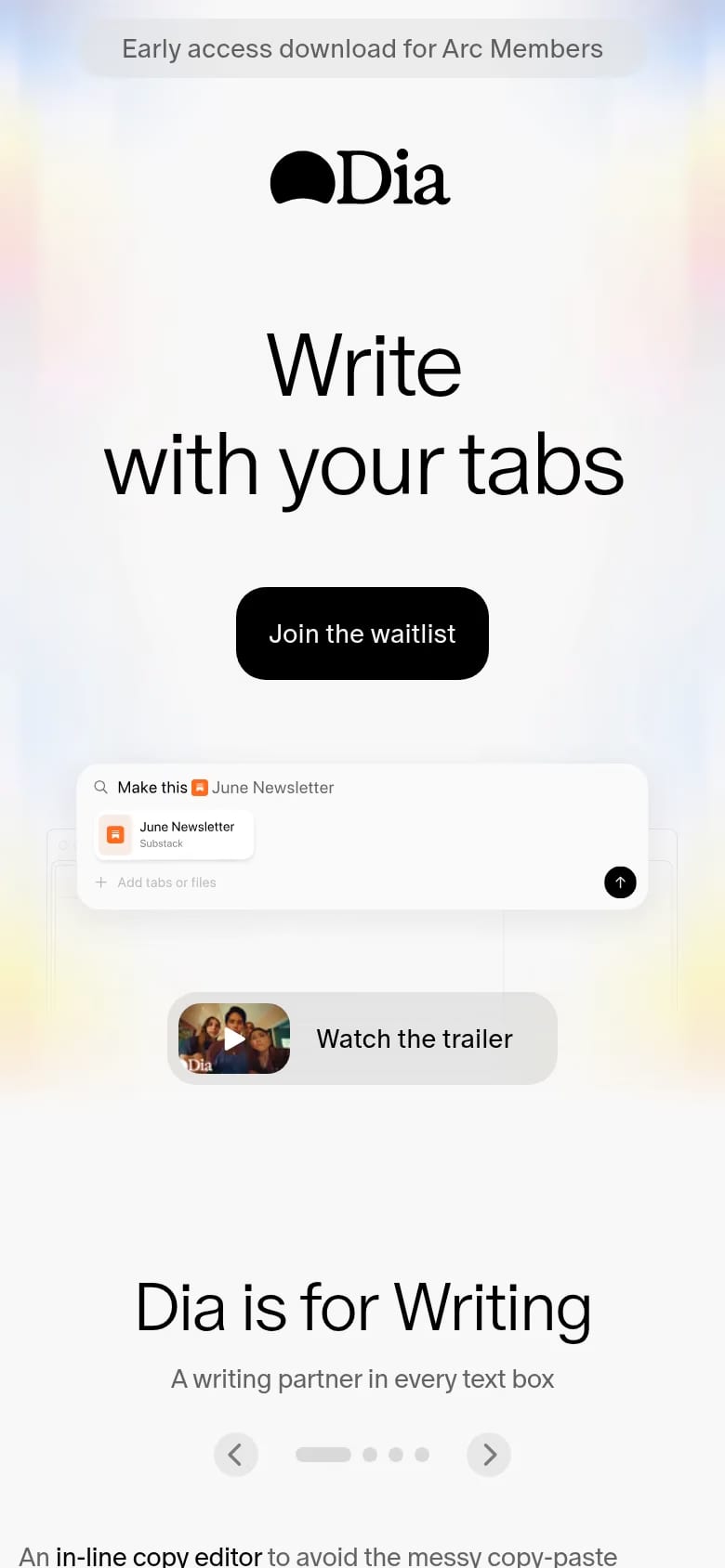
From the Browser Company — the team behind Arc. The hero cycles through use cases as rotating titles, each one getting its own video demonstration alternating left and right down the page. Warm off-whites, soft grays, nothing pulling focus from the product. Privacy messaging gets equal visual weight to feature descriptions, which reads as a direct response to the questions Arc raised about what the company knows about its users.
JasperJasper mobile

Jasper

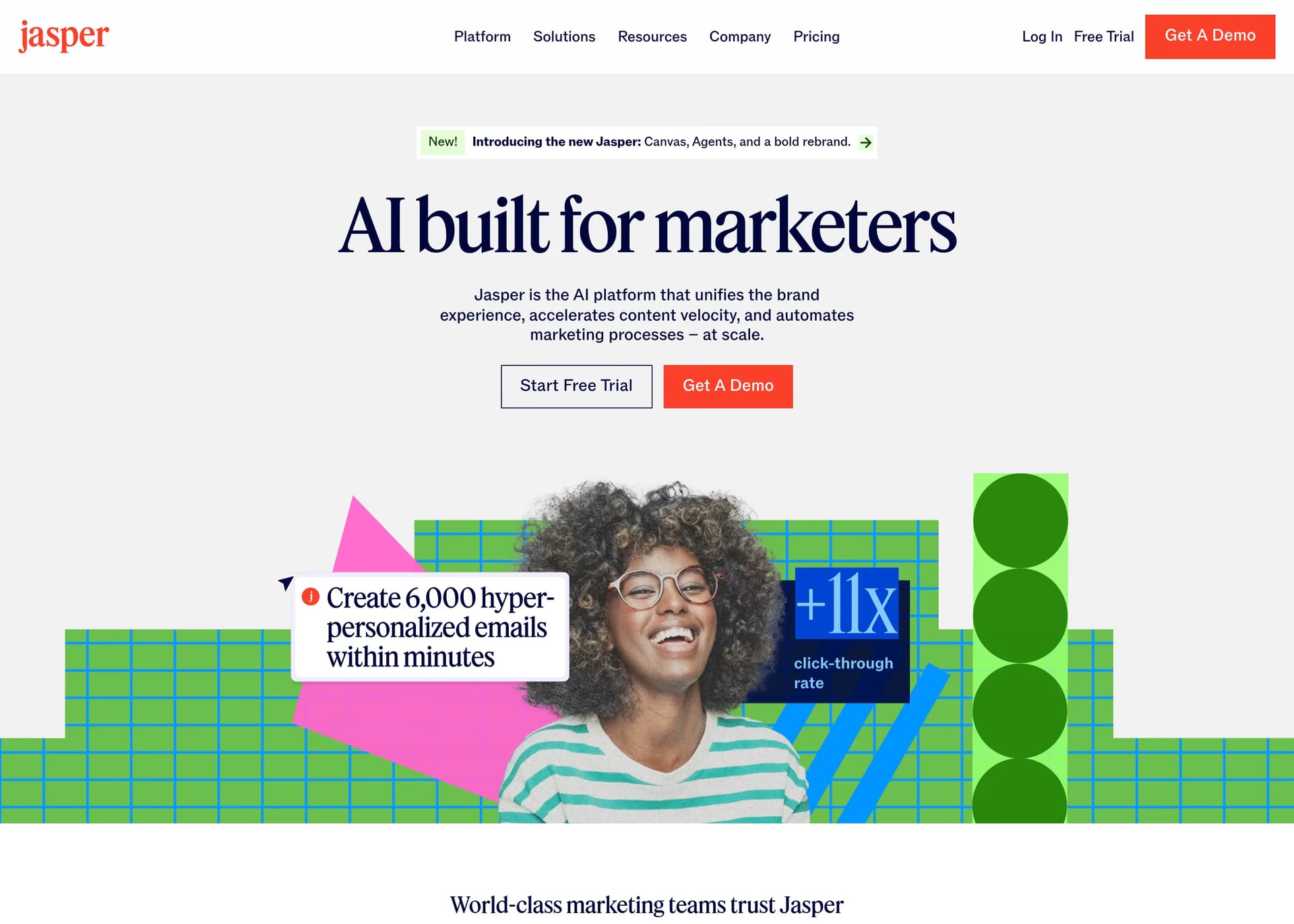
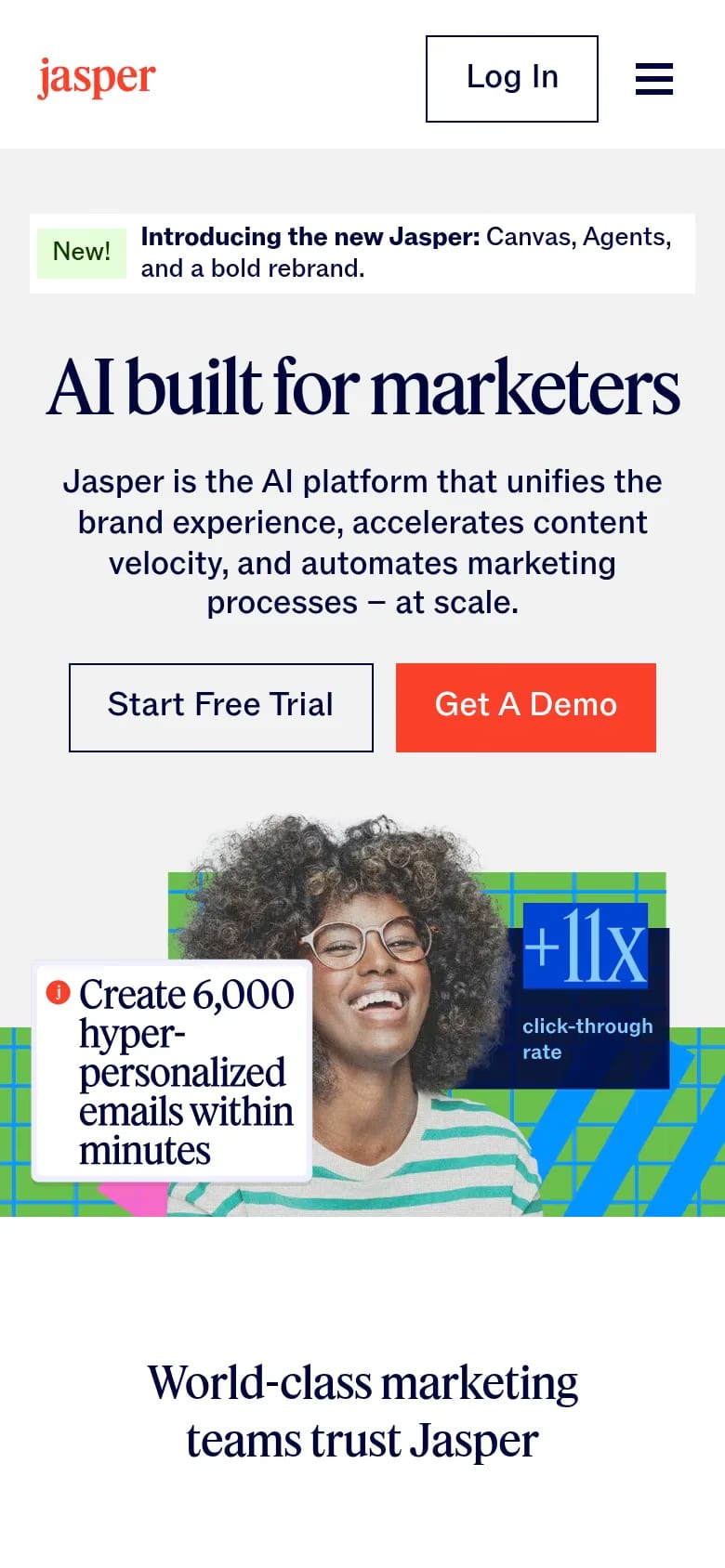
The hero is a full-viewport Rive animation — different artwork loaded for desktop and mobile via IntersectionObserver, so mobile users get something built for that context rather than a scaled-down version. The live colour system is the best interactive touch on any site in this roundup: swatch variables shift across the whole page when you switch between product tabs, the visual language changing with context in real time. Card hover states rotate randomly, ±3.5 degrees. A lot of motion, all of it answering to a system.

These are seventeen picks from over 140 AI sites in the gallery. Browse all AI website designs on A1 to find more, or explore dark AI sites by combination.

Frequently asked questions

What are the best AI startup website designs in 2026?

Legora stands out for using three display font families simultaneously — Rhymes Display, Domaine Display Narrow, and Suisse Intl — with a warm lime green and orange accent palette that breaks entirely from the legal tech norm. Arcade uses Press Start 2X (a pixel font) alongside Inter as a decorative accent, with a smooth animated tracker bar for its demo/video toggle. Windsurf commits to a deep navy colour scheme with a decorative SVG wave and unusually tight letter spacing that gives the typography a precision most dev tools don't bother with.

What makes a good AI startup website design?

The best AI startup websites are specific rather than generic. They use typefaces that match the product's character, colour palettes that differentiate from the category default, and interactions that demonstrate what the product does rather than just how capable it seems. The sites that stand out in 2026 tend to have one strong visual conviction — a distinctive display typeface, a colour system tied to product logic, or a hero interaction that makes the pitch before the copy does — rather than accumulating effects.

Which AI startup websites are worth studying for design?

Flint is worth studying for how it shows output rather than promising it — actual landing pages the tool has generated scroll in a carousel below the hero. Jasper is worth studying for its live colour system: swatch variables shift across the whole page when you switch between tabs, so the visual language changes with the product context. Dia is worth studying for its alternating left/right video demonstrations — each use case gets its own clip, the browser shown in context rather than isolated against a background.
Share post

Get the 10 best sites in your inbox weekly

1,500+ designers get inspired every Tuesday

Jonas
UHF
Cluster